
Another Brick in the Wall
Introduction
Song Arrangement
Song Demo
Solo
Unlock Full Access to Lyrics & Chords with Torrins Membership
Unlock with premiumNo Description Available
Another Brick in the Wall
Introduction
Song Arrangement
Song Demo
Solo
Unlock Full Access to Lyrics & Chords with Torrins Membership
Unlock with premiumExplore More in English Songs














Similar Rock Songs

Introduction:
Torrins brings you a detailed lesson on Hotel California by The Eagles, taught by Mike Walker. This song is a rock guitar masterpiece, featuring multiple guitar parts, intricate solos, and the signature 12-string acoustic intro that every guitarist wants to master.
To ensure a smooth learning experience, this lesson includes tabs and lyrics and breaks down each guitar part step by step.
Fun Fact: In 1998, during their induction into the Rock and Roll Hall of Fame, all seven Eagles members performed Hotel California together for the only time ever.
Chords, Rhythm, & Song Arrangement
This lesson covers multiple guitar parts, from acoustic rhythm to electric lead work.
- Guitar 1: The 12-string acoustic intro played by Steve Luciano.
- Guitar 2: Played on an acoustic guitar, covering the main chord progression with precise picking patterns. This part starts with an open D chord and moves through a D major triad.
- Chords Used: D, Em, F#m, Bm, and more. Mike breaks down which strings to leave open and which to mute for the perfect sound.
- Guitar 3 (Reggae Section): A muted electric guitar rhythm that appears in the verse section. Played in the key of B minor, with movable F# and E9 chords. It also has some inverted chords. The strumming pattern follows a downstroke with an open fretboard, followed by a down-up motion. Tune into the learn it seamlessly by the pro!
- Guitar 4 (Muted Clean Part): A subtle section that introduces muting techniques and power chords, adding to the song's dynamic feel.
- Guitar 5 & Guitar 6: These sections introduce lower and higher harmonies, reinforcing the layered guitar arrangement.
Mike walks through each of these sections in detail, ensuring you can replicate the exact feel of the original recording.
Lead Guitar-Licks & Solos
- Overdub Licks: The first chorus features a double-stop lick with hammer-ons and pinch harmonics.
- Three Guitar Solos: The solos blend B minor pentatonic, B minor, and B harmonic minor scales. Some licks focus on bends, slides, and expressive phrasing.
- Outro Solo: Features two interwoven guitar parts, with the first part built around arpeggios like the B minor arpeggio.
Mike takes you through each solo note by note, showing how to nail the tone and phrasing of this legendary song.
Beginner-Friendly Chord Progression
If you're not ready to tackle all the guitar layers, Mike provides a simplified chord progression that lets beginners play along with the song.
- Chords Used: A, E, F#m, Em, and others.
- Alternative Strumming Pattern: A beginner-friendly rhythm variation to match the song’s feel.
Why Learn Hotel California?
- Essential for Rock Guitarists – It is one of the most recognizable intros and solos in rock history.
- Teaches Advanced Techniques – This song includes various techniques like fingerpicking, muting, harmony lines, and expressive soloing.
- Perfect for Rhythm & Lead Players – The song covers both acoustic strumming and intricate lead work.
FAQs – Hotel California Guitar Lesson
Q1: Is this lesson beginner-friendly?
While the original song is challenging, the lesson includes simpler chord progressions and rhythm parts for beginners.
Q2: What techniques will I learn?
Muted strumming, harmony playing, arpeggios, lead phrasing, and solo improvisation techniques.






If You Like Pink Floyd, You'll Love These



Introduction
Tune into a classic Pink Floyd guitar lesson on Wish You Were Here at Torrins.com, led by our experienced tutor, Mike Dugan. He breaks down the lesson into various sections: Introduction, Intro Chords & Rhythm, Intro Lead, Verse & Chorus Lesson, Solo Improvisation, Arrangement & Playing with Backing Track.
Interesting Fact: In the song's intro, you can hear David Gilmour coughing and breathing heavily before the guitar kicks in. Rumour had it that Gilmour’s smoking habit caused the cough, and that he quit smoking afterwards out of frustration with the recording. But Gilmour later clarified he never smoked!
Mike plays the song using various open chords, including Em, Em7, G, A, and Am. Tune into the complete lesson to learn the rest of the chords that make up this song. This song is a great choice for both beginners and intermediate players.
Chords Used in "Wish You Were Here" Guitar Lesson
This song is played using simple open chords, making it accessible for both beginners and intermediate players. For intermediate players, Mike introduces some alternate chord voicings to stay true to the song’s original sound while adding a unique touch.
Strumming Pattern
The strumming pattern is beginner-friendly with consistent downstrums. For those wanting to level up, Mike shares an advanced rhythm that incorporates upstrums for a more dynamic feel.
Song Structure
"Wish You Were Here" follows a clear and structured arrangement:
- Intro: Lead + rhythm section (Mike provides a simpler alternative for beginners)
- Lead Riffs: Based on the E minor pentatonic scale and its extensions, featuring double stops and hammer-ons.
- Verse 1: Smooth chord transitions; beginners can use downstrums, while advanced players can follow the more complex rhythm.
- Solo: You can either repeat the intro solo or follow Mike’s improvisation using the E minor pentatonic scale.
- Verse 2: Similar to Verse 1, with consistent strumming and clean transitions.
- Final Solo: A concluding solo based on the intro lead and E minor pentatonic improvisation.
Improvisation Techniques
Mike teaches how to improvise using the E minor pentatonic scale. He also adds his own flair by playing it on the 12th fret in true David Gilmour style.
Singing Along
Mike also walks you through the singing component, helping you match the chord changes with the lyrics.
Pro Tip: Make use of tabs and lyrics for smoother learning.
Why Learn "Wish You Were Here"?
This lesson helps you improve your chord transitions and develop a smooth, expressive playing style. It's a great piece to master for solo and sing-along sessions. Plus, learning David Gilmour’s style will sharpen your improvisation skills.
Tips to Improve:
- Focus on clean chord transitions.
- Keep your strumming hand relaxed to maintain a steady rhythm.
FAQs – "Wish You Were Here" Guitar Lesson
Q1. Is this song beginner-friendly?
Yes! The chords are straightforward, and Mike provides a simplified version of the intro for beginners.
Q2. Can I just strum the song instead of fingerpicking?
Yes! You can simplify the song with consistent downstrums or follow the more advanced strumming pattern Mike shares.

Introduction
Tune into a simple fingerpicking guitar song lesson on "Goodbye Blue Sky" on Torrins. This lesson is led by our instructor, Steve Luciano, who breaks down the various sections of the song for easy understanding. This Goodbye Blue Sky guitar tutorial covers the strumming pattern, fretting, and rhythm techniques that make this song sound so great.
Interesting Fact: The song’s soft, almost lullaby-like melody is a stark contrast to its dark theme of war and destruction. Roger Waters wrote it as a reflection of his childhood memories of the London Blitz during World War II. The track opens with a child's voice saying, "Look, mummy, there's an aeroplane up in the sky!"—a chilling moment that symbolizes the innocence of youth being shattered by the horrors of war.
Chords & Tuning
"Goodbye Blue Sky" is a simple fingerpicking song. Before getting started, tune your 6th string to Drop D—this gives the song its deep, resonant tone.
Fingerpicking Pattern
The fingerpicking technique adds an intricate and melodic touch to this song while keeping the rhythm steady, making this song perfect for practising control and precision.
Song Structure & Techniques
The song kicks off with a repeating section that features pull-offs, adding a smooth, connected feel to the melody. This section repeats four times and helps build fluidity in your playing. If you’re still getting comfortable with pull-offs, be sure to explore our in-depth lesson on this essential technique.
As the arrangement develops, you’ll come across hammer-ons, which lend a punchier articulation to the notes. Steve also incorporates power chords, specifically B and F#, along with an open G, contributing to a fuller, more dynamic sound. Later in the progression, he introduces barre chords across the 2nd and 3rd strings, creating a seamless, flowing texture. These techniques come together to give the song its distinct blues-rock character while helping you improve precision and control.
Learning Made Easier
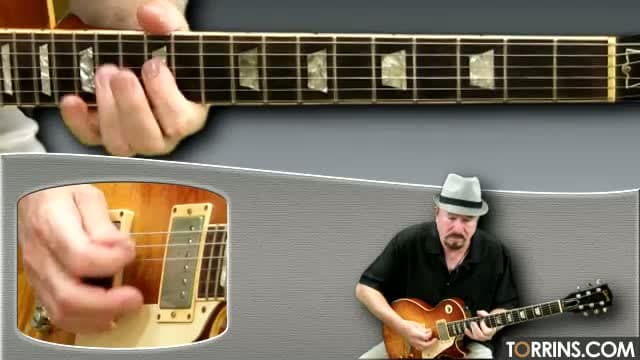
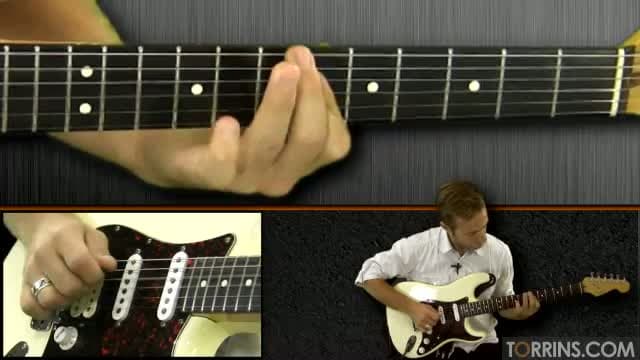
The 3-angle camera view makes learning such songs so much easier. With dedicated angles on strumming, fretting, and an overall view, you get a detailed, close-up look at all the intricate finger movements, helping you learn efficiently and effectively.
Pro Tip for Mastering the Song
Steve recommends breaking the song into sections and practising each part individually before putting everything together. This will ensure you develop muscle memory for clean and precise playing.
FAQs – "Goodbye Blue Sky" Guitar Lesson
Q1. Is this song beginner-friendly?
A: While the song follows a simple fingerpicking style, it requires coordination and control. It's great for beginners looking to build finger independence and practice melodic fingerpicking.
Q2. Do I need to use a pick for this song?
A: No, this song is best played with fingerpicking, which gives it its signature soft and flowing sound.
Q3. What’s the best way to improve my fingerpicking accuracy?
A: Slow down and focus on precision before building up speed. Keep your right hand relaxed, and ensure each note rings out clearly.