

No Description Available
Explore More in English Songs










Introduction
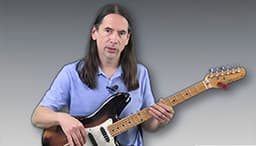
Learn the famous “I Shot the Sheriff” on Torrins, led by our expert instructor Steve Luciano, who has decades of experience playing and teaching guitar. “I Shot the Sheriff” is originally a reggae song written by Bob Marley and released in 1973 with his band, The Wailers. However, you'll be playing Eric Clapton’s version of this song with Steve on Torrins.com. Eric recorded his cover in 1974 for his album 461 Ocean Boulevard. His performance of the song adds soft rock to the reggae sound, giving it a unique feel.
The difficulty level of this guitar lesson ranges from beginner to intermediate and breaks down the chords, rhythm, structure, and strumming pattern in a simple yet engaging way! So, tune in and unfold the magic of this hit cover!
Steve Luciano teaches the I Shot The Sheriff Song guitar lesson using 4 movable chords: Gm, Cm, Eb, and Dm. No capo is needed!
Chords Used in I Shot the Sheriff Guitar Lesson
This song is played using movable chords, which are common in reggae music.
Chords used: Gm, Cm, Eb, Dm
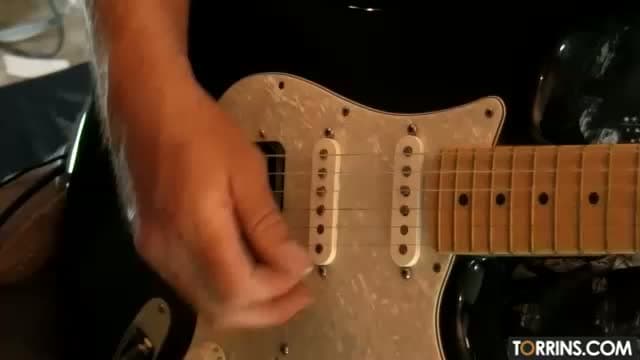
Steve teaches essential finger positioning and movement techniques to help make chord transitions smoother. He also demonstrates how to lighten finger pressure to achieve the signature reggae "deadening" effect on the strings.
Strumming Pattern
Pattern: D-U-D-U
- Like other reggae songs, this one emphasizes playing on the downbeat but feeling the upbeat to capture its groove.
- It’s good if you practice the chords first before adding rhythm, as some transitions can be tricky.
Song Structure
This song follows a verse-chorus format:
- Verse: The beginning of the song primarily uses Gm and Cm chords.
- Chorus: Introduces the Eb chord, which can be challenging for some players. Steve demonstrates easier ways to play Eb, particularly for those with larger fingers.
- The chorus chord progression repeats five times.
- At the end of the chorus, there's a signature single-note tag based on the Gm pentatonic scale. This lick is played each time the chorus ends.
Improvisation Techniques
- The song features a signature lick at the end of the chorus, based on the Gm pentatonic scale. Steve breaks down how to play the notes smoothly to maintain the song’s groove.
Why Learn I Shot the Sheriff on Guitar?
- Learning this song can help you master movable chord shapes commonly used in reggae.
- It will also help you improve reggae-style strumming and chord muting techniques.
- Additionally, it provides insight into lead guitar phrasing with the signature pentatonic lick.
Tips for Playing the Song Smoothly
- Practice chord transitions first before adding strumming.
- Loosen your grip to achieve the proper reggae deadening effect.
- Feel the upbeat while strumming for an authentic reggae sound.
FAQs – I Shot the Sheriff Guitar Lesson
Q1. Is this song beginner-friendly?
A: It’s suitable for intermediate players, as it uses movable chords, which may be challenging for beginners.
Q2. What if I struggle with the Eb chord?
A: Steve demonstrates easier alternatives for players who find it difficult, especially those with larger fingers.
Fun Fact: “I Shot the Sheriff” was originally a spiritual metaphor for birth control, though Bob Marley never revealed which lyrics were true. Eric Clapton’s 1974 cover became a massive hit, introducing Marley’s music to rock audiences worldwide. While Marley was happy with the cover, he was frustrated that the song was widely misinterpreted as an anthem against injustice and corruption rather than its original meaning.

Similar Punk Rock Songs

If You Like Green Day, You'll Love These

Introduction
Tune in to the detailed guitar lesson for Good Riddance (Time of Your Life) on Torrins. This ballad, performed by the American rock band Green Day, is broken down step by step by our expert instructor, Steve Luciano. He explains the song’s various elements for better understanding, including chords, rhythm, and the backing track. The difficulty level of this tutorial ranges from beginner to intermediate.
Chords Used in Good Riddance (Time of Your Life) Guitar Lesson
Verse & Chorus Chords: The verse and chorus section uses open chords
Make use of the tabs provided with the lesson to follow along smoothly, understand finger placement, and improve your accuracy. The G chord in this song has a slightly more complex finger positioning than what beginners might be used to, but Steve breaks it down clearly to make it easier to play. He also offers alternative ways to approach the D/F# chord in case you find it challenging.
Strumming Pattern
Pattern: D-D-U-U-D
This pattern is played twice to complete one measure (four beats).
Steve shares great strumming tips to make the sound more defined.
Chord Transitions: Steve teaches smooth chord changes, such as G to Cadd9. Play along with Steve to get a good control over transitions.
Final Playthrough: Steve plays along with the song, showing how the full arrangement comes together.
Improvisation & Playing Techniques
- Learn how to make the full-sounding open-string G chord properly.
- Gain control over the Cadd9 chord, a popular chord in pop music.
- Tips for transitioning smoothly between chords.
Pro Tips from Steve
- Start slow – Play the melody in your head before playing along with the track, as the song has a fast strumming tempo.
- Focus on chord clarity and bass notes to make your playing sound cleaner.
FAQs – Good Riddance (Time of Your Life) Guitar Lesson
Q1. Is this song beginner-friendly?
A: Yes! While the song has a slightly complex G chord and a D/F# transition, it is still manageable for beginners with practice.
Q2. What strumming pattern is used in this song?
A: The strumming pattern is D-D-U-U-D, played twice per measure. Steve also shares tips on how to make the rhythm sound more natural and which strings to emphasize to achieve a sound closest to the original version.
Q3. Do I need a capo for this song?
A: No capo is required. The song is played in the key of G, using open chords.
Q4. Is this song played on an acoustic guitar?
A: Yes! The song is originally played on an acoustic guitar. However, you can use a clean electric guitar tone for a similar feel.
Fun Fact: The album version of this song begins with Billie Joe Armstrong messing up the opening chords twice before starting over and getting it right. These mistakes were deliberately kept to add a lighthearted introduction to the song.
The Good Riddance (Time of Your Life) song lesson is played in the key of G, and some of the chords used in this popular song include G, Cadd9, D, and D/F# (D with F# in the bass). Check out the complete lesson to learn the other chords that make up this song.