Guitar Tone

Introduction
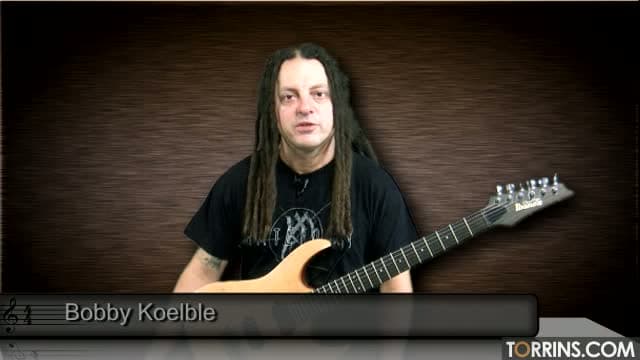
Get ready to master another death metal classic on Torrins—Symbolic by the band Death. This lesson is taught by Bobby Koelble himself, one of the guitarists on the original track. Bobby breaks down the song into several parts, covering essential chords, rhythms, and guitar tones, ensuring a detailed and engaging learning experience.
Fun Fact
Bobby Koelble joined Death after being recommended to Chuck Schuldiner, the band's co-founder, by a friend working at a local music store. Koelble and Schuldiner had known each other since high school in Orlando. After joining the band, Koelble toured with Death across the United States, Canada, Europe, and Japan before the band eventually disbanded.
Chords and Techniques Used in Symbolic
- Tuning: Standard tuning down a whole step
- Key: E minor
- Some of the chords used in this song are G#, F#, Bm, and A7. Tune in to the lesson to know the rest of the chords used in this song.
Song Structure
- Main Riff: The main riff repeats seven times and features vibrato, alternative picking, and palm muting. It includes a few power chords, one being G#.
- Chorus: The chorus riff follows the same pattern as the main riff but repeats 14 times. Tune in to the lesson for a detailed breakdown of the rest of the chorus.
- Solo Section: The solo section features four power chords. In this section, there’s a transition riff as well, which consists of four single notes and a power chord.
- Solo section played by Bobby in the original song: It is played in the key of F# and features chords like B minor, F# power chord, and A7—all diatonic to F#. He breaks down the solo into three sections: beginning, middle, and end and shares valuable tips on mastering the solo, including his creative process behind crafting the iconic riff.
Bobby plays all elements slowly, first to make it easier to follow, then repeats them at normal speed. He also explains the guitar tone in detail.
Why Learn Symbolic?
This lesson provides a detailed breakdown of one of death metal’s most iconic tracks. Bobby Koelble’s insight into the composition and technique will help you refine your alternative picking, palm muting, and power chord transitions. It's a challenging yet rewarding song to master for any metal guitarist. If you’re an advanced player or an intermediate player looking for songs to improve your techniques, this song has to be in your repertoire.
Tips to Improve Your Playing
- Start by playing the riffs at a slower pace, then gradually increase your speed.
- Pay close attention to the vibrato and palm muting techniques to capture the song’s unique tone.
- Focus on smooth chord transitions during the solo to maintain the song’s flow.
FAQs – Symbolic Guitar Lesson
Q1. Is this song suitable for beginners?
Ans: This lesson is recommended for intermediate to advanced players due to its fast-paced riffs and complex solos.
Q2. What tuning is used for this song?
Ans: The song is played in standard tuning down a whole step.
Introduction
Get ready to master another death metal classic on Torrins—Symbolic by the band Death. This lesson is taught by Bobby Koelble himself, one of the guitarists on the original track. Bobby breaks down the song into several parts, covering essential chords, rhythms, and guitar tones, ensuring a detailed and engaging learning experience.
Fun Fact
Bobby Koelble joined Death after being recommended to Chuck Schuldiner, the band's co-founder, by a friend working at a local music store. Koelble and Schuldiner had known each other since high school in Orlando. After joining the band, Koelble toured with Death across the United States, Canada, Europe, and Japan before the band eventually disbanded.
Chords and Techniques Used in Symbolic
- Tuning: Standard tuning down a whole step
- Key: E minor
- Some of the chords used in this song are G#, F#, Bm, and A7. Tune in to the lesson to know the rest of the chords used in this song.
Song Structure
- Main Riff: The main riff repeats seven times and features vibrato, alternative picking, and palm muting. It includes a few power chords, one being G#.
- Chorus: The chorus riff follows the same pattern as the main riff but repeats 14 times. Tune in to the lesson for a detailed breakdown of the rest of the chorus.
- Solo Section: The solo section features four power chords. In this section, there’s a transition riff as well, which consists of four single notes and a power chord.
- Solo section played by Bobby in the original song: It is played in the key of F# and features chords like B minor, F# power chord, and A7—all diatonic to F#. He breaks down the solo into three sections: beginning, middle, and end and shares valuable tips on mastering the solo, including his creative process behind crafting the iconic riff.
Bobby plays all elements slowly, first to make it easier to follow, then repeats them at normal speed. He also explains the guitar tone in detail.
Why Learn Symbolic?
This lesson provides a detailed breakdown of one of death metal’s most iconic tracks. Bobby Koelble’s insight into the composition and technique will help you refine your alternative picking, palm muting, and power chord transitions. It's a challenging yet rewarding song to master for any metal guitarist. If you’re an advanced player or an intermediate player looking for songs to improve your techniques, this song has to be in your repertoire.
Tips to Improve Your Playing
- Start by playing the riffs at a slower pace, then gradually increase your speed.
- Pay close attention to the vibrato and palm muting techniques to capture the song’s unique tone.
- Focus on smooth chord transitions during the solo to maintain the song’s flow.
FAQs – Symbolic Guitar Lesson
Q1. Is this song suitable for beginners?
Ans: This lesson is recommended for intermediate to advanced players due to its fast-paced riffs and complex solos.
Q2. What tuning is used for this song?
Ans: The song is played in standard tuning down a whole step.
Explore More in English Songs

Introduction:
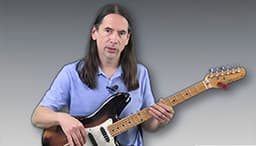
Torrins brings you an exciting guitar lesson "Wonderwall" by Oasis, taught by Mike McQuinn. This timeless classic is a must-learn for any guitarist, helping you master chord variations, strumming patterns, and how to play and sing simultaneously. Mike breaks down this song lesson into multiple lessons for easy learning - Introduction, Chords and Strumming, Sing and Play and Song Demo.
Fun Fact: In October 2020, "Wonderwall" became the first song from the 1990s to surpass one billion streams on Spotify. Today, it ranks as the second most-streamed song from that decade, following Nirvana's "Smells Like Teen Spirit”.
Chords Used in Wonderwall Guitar Lesson: The song is built around five essential chord patterns, which you’ll learn in detail in the song lesson. Some of the chords that make up this song are: G, Em7, Dsus4, A7Sus4, Cadd9. Tune in to the lesson to learn the rest.
One chord pattern includes a walk-down pattern for smooth transitions.
All chords are played with a capo on the 2nd fret
Strumming Pattern The primary strumming pattern is:
- DDUDUDDUDUDD (Repeats UDUDD three times and ends with UD)
- An alternate strumming pattern is used in the walk-down chord section—learn the difference in the lesson!
Song Structure & Breakdown This lesson is divided into multiple sections for easy learning:
- Introduction: This section has an overview of the lesson structure and key techniques.
- Chords & Strumming: This section includes all the chords used in this song, and Mike shares the five essential chord patterns that make up this song. He demonstrates how to transition smoothly. The song finishes with a repetitive lead part—Mike explains how to master it effortlessly. He shares tips to master the rhythm of the song.
- Sing & Play: Mike teaches how to coordinate vocals with guitar playing, gearing you up for jamming sessions!
- Song Demo: The song lesson ends with a full demonstration of the song to tie everything together.
Tip: Follow along with the Tabs provided with the song lesson for quick and effective learning.
Why Learn Wonderwall?
- Learning this song will help you improve chord transition and variation skills.
- It will also help you master rhythm consistency with its distinct strumming pattern.
- It will enhance your ability to play and sing simultaneously.
FAQs – Wonderwall Guitar Lesson
Q1. Is this song beginner-friendly?
Ans- Yes! The chords are slight variations to basic chords and are used repetitively, making it a great song for all skill levels.
Q2. Do I need a capo?
Ans- Yes, the song is played with a capo on the 2nd fret to match the original key.
Q3. How do I improve my strumming for this song?
Ans- Focus on maintaining a relaxed wrist and practice the primary strumming pattern slowly before speeding up.




Introduction
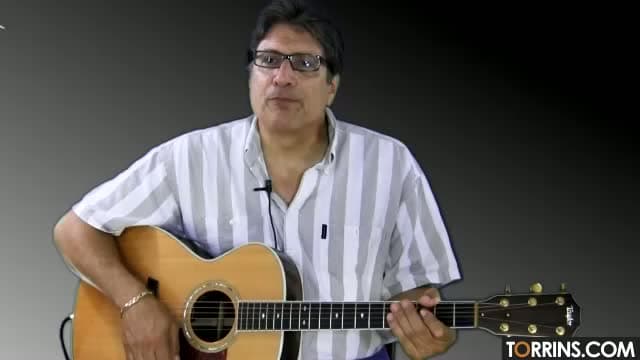
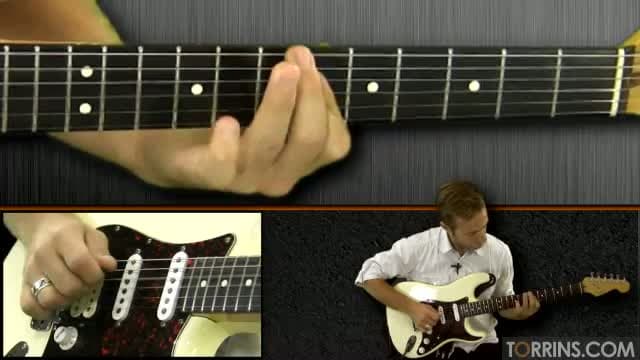
Tune in to the detailed guitar lesson for Good Riddance (Time of Your Life) on Torrins. This ballad, performed by the American rock band Green Day, is broken down step by step by our expert instructor, Steve Luciano. He explains the song’s various elements for better understanding, including chords, rhythm, and the backing track. The difficulty level of this tutorial ranges from beginner to intermediate.
Chords Used in Good Riddance (Time of Your Life) Guitar Lesson
Verse & Chorus Chords: The verse and chorus section uses open chords
Make use of the tabs provided with the lesson to follow along smoothly, understand finger placement, and improve your accuracy. The G chord in this song has a slightly more complex finger positioning than what beginners might be used to, but Steve breaks it down clearly to make it easier to play. He also offers alternative ways to approach the D/F# chord in case you find it challenging.
Strumming Pattern
Pattern: D-D-U-U-D
This pattern is played twice to complete one measure (four beats).
Steve shares great strumming tips to make the sound more defined.
Chord Transitions: Steve teaches smooth chord changes, such as G to Cadd9. Play along with Steve to get a good control over transitions.
Final Playthrough: Steve plays along with the song, showing how the full arrangement comes together.
Improvisation & Playing Techniques
- Learn how to make the full-sounding open-string G chord properly.
- Gain control over the Cadd9 chord, a popular chord in pop music.
- Tips for transitioning smoothly between chords.
Pro Tips from Steve
- Start slow – Play the melody in your head before playing along with the track, as the song has a fast strumming tempo.
- Focus on chord clarity and bass notes to make your playing sound cleaner.
FAQs – Good Riddance (Time of Your Life) Guitar Lesson
Q1. Is this song beginner-friendly?
A: Yes! While the song has a slightly complex G chord and a D/F# transition, it is still manageable for beginners with practice.
Q2. What strumming pattern is used in this song?
A: The strumming pattern is D-D-U-U-D, played twice per measure. Steve also shares tips on how to make the rhythm sound more natural and which strings to emphasize to achieve a sound closest to the original version.
Q3. Do I need a capo for this song?
A: No capo is required. The song is played in the key of G, using open chords.
Q4. Is this song played on an acoustic guitar?
A: Yes! The song is originally played on an acoustic guitar. However, you can use a clean electric guitar tone for a similar feel.
Fun Fact: The album version of this song begins with Billie Joe Armstrong messing up the opening chords twice before starting over and getting it right. These mistakes were deliberately kept to add a lighthearted introduction to the song.
The Good Riddance (Time of Your Life) song lesson is played in the key of G, and some of the chords used in this popular song include G, Cadd9, D, and D/F# (D with F# in the bass). Check out the complete lesson to learn the other chords that make up this song.

Introduction:
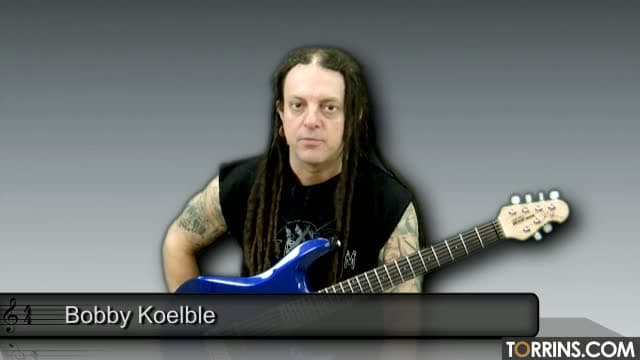
Torrins brings you another electrifying guitar lesson "Crystal Mountain by Death", taught by none other than Bobby Koelble, one of the original guitarists on the track. This lesson breaks down the intricate riffs, solos, and powerful progressions that make this song a metal masterpiece.
Fun Fact: Crystal Mountain was inspired by Chuck Schuldiner’s real-life experiences with his not-so-friendly next-door neighbour. Their unpleasant interactions fueled the aggression and emotion behind this legendary track!
Tuning & Gear
- Tuning: Standard tuning down a whole step.
- Use the provided tabs for a more comprehensive learning experience.
Song Breakdown
This lesson is structured into multiple sections to make learning seamless:
- Introduction
- Intro Riff
- Verse
- Chorus
- Bridge
- Solo-Tapping Section
- Main Solo
- Acoustic Solo
- Song Demo (Chuck’s Part)
- Song Demo (Bobby’s Part)
- Full Song Demo (Combining All Parts)
Chords & Riffs in Crystal Mountain
Intro Riff
- The first 8 bars feature power chords like E, Bb, and F, with vibrato. Tune in to the lesson to learn the rest of the chords.
- The second half of the intro is harmonised down a perfect 5th.
- Scale: E Harmonic Minor.
Verse
- The Am chord is played with a variation in arpeggio.
- Includes F power chords and some single notes, along with other chords.
- Heavy distortion is used to achieve that signature Death sound.
Chorus
- Chorus features single notes and an active midsection involving the open 5th string.
- Chuck Schuldiner added an intricate melody over the chorus section. Bobby walks you through this in detail.
Bridge
- It begins with power chords in the rhythm track.
- It is layered with harmonised single-note phrases on top
Solo Sections
Tapping Solo
- This solo features harmonised tapping licks at the 12th fret.
Main Solo
- Chuck’s solo—short but iconic.
- It is in the key of G# minor.
- Uses triplets and expressive vibrato.
Acoustic Solo
- An acoustic solo is a rare touch in a Death song! Bobby demonstrates 4 simple acoustic licks to round off the song.
Final Song Demo
After breaking down every section, Bobby dedicates three lessons to the song demo:
- Chuck’s part
- His own part
- The full song, combining all elements
Why Learn Crystal Mountain?
- Learning this song will help you master intricate picking techniques.
- It will also help you understand harmonised riffs and solos.
- It will expand your knowledge of scales and metal phrasing.
FAQs – Crystal Mountain Guitar Lesson
Q1. Is this lesson suitable for beginners?
A: This lesson is best suited for intermediate to advanced players because of its complex chords and solos.
Q2. What is the most challenging part of the song?
A: The solo-tapping section and harmonised melodies require precise technique and practice.
Q3. Can I play this without tuning down?
A: Yes, you can, but tuning down a whole step helps achieve the authentic Death sound.
Similar Metal Songs



If You Like Death, You'll Love These


Introduction:
Torrins brings you an in-depth guitar lesson on Zero Tolerance by Death, taught by none other than Bobby Koelble—one of the original guitarists on the track. This lesson dissects the song’s intricate riffs, multiple solos, and unique techniques to help you master this classic death metal piece.
Fun Fact: The title Zero Tolerance was later used for two compilation albums released under Chuck Schuldiner’s name, featuring rare demo material from both Death and Control Denied.
Tuning and Song Structure
- Standard tuning, down a whole step.
- Multiple solos from both Chuck Schuldiner and Bobby Koelble.
- This Lesson is structured into key sections: Introduction, Intro Riff, Solo-1 (Chuck), Chorus, Bridge, Main Solos (Chuck & Bobby), Solo 2 (Bobby), Song Demo, and Final Note on Chorus.
- Make sure to use the provided chords and tabs to follow along!
Breaking Down the Song
Intro Riff
- Mostly in the key of E minor.
- Straightforward riff featuring power chords, including low E power chords.
- Incorporates muted string techniques for a tight and punchy sound.
First Solo (Chuck Schuldiner)
- Simple power chord progression in the background, one of which is C.
- Features an E minor major 7 arpeggio.
- Chuck was known for focusing on feel rather than strict technical terms—tune into the lesson for an in-depth breakdown!
Chorus
- Includes a riff and a melody.
- Has a slow tempo (for a Death song), making it one of the easier riffs to play.
- Features low E power chords, single notes, and palm-muted sections, along with other chords.
Bridge
- A relatively easy section featuring some power chords and palm-muted notes.
- Watch the lesson to master the additional chords!
Main Solo (Chuck Schuldiner)
- Opens with a harmonized melodic lick up the 3rd.
- Uses the A harmonic minor scale.
- Bobby shares valuable insights on writing melodic solos—a must-watch for aspiring songwriters.
Main Solo (Bobby Koelble)
- Played in F# minor.
- Starts with an introductory lick harmonized up a 5th, then shifts to a minor 3rd harmony.
- Solo is broken down into multiple digestible sections for easy learning.
Solo 2 (Bobby Koelble)
- A short but technical solo occurring between the verse and chorus.
- Starts with a C note and a tapped harmonic.
- This section covers artificial harmonics.
Final Note on Chorus
- Discusses the background chords heard in the final chorus.
- Bobby teaches unique finger positioning techniques to recreate the exact sound.
Song Demo & Summary
To wrap it all up, Bobby plays the full song with a backing track, demonstrating how all the sections come together.
Why Learn Zero Tolerance?
- Learn palm muting, power chord progressions, and harmonized melodies.
- Master multiple solo styles, from Chuck’s emotive phrasing to Bobby’s technical intricacies.
- Get valuable songwriting and soloing insights from an original artist of the song.
FAQs – Zero Tolerance Guitar Lesson
Q1. Is this lesson beginner-friendly?
- This lesson leans more towards intermediate to advanced players.
Q2. How can I improve my palm muting technique?
- Focus on muting with the side of your palm near the bridge while maintaining a tight, controlled attack.
Q3. Are tabs provided for the lesson?
- Yes! The chords and tabs included will help you nail every section.