Introduction
Bombtrack is one of the explosive songs from Rage Against the Machine’s debut album. In addition to this, it comes with powerful riffs, and groove-driven rhythms and it also includes aggressive energy.
Chords Used in Song Guitar Lesson
Arpeggios Verse & Chorus Chords: There are no traditional arpeggios in the verse, instead you have to follow heavy power chords with a combination of muted rhythms.
e|---------------------------------|
B|---------------------------------|
G|---------------------------------|
D|---------4-4-2-2-4--------------|
A|---2-2--------------------------|
E|---------------------------------|
Strumming Pattern
This song follows a more tight-riff playing than your traditional strumming. As a result, you have to follow the rhythm guitar approach to be more precise and smooth. Here is how you should be strumming with a palm-muted downstroke approach for punchy rhythm: D D D D D U D U.
- D = Down strum
- U = Up strum
Song Structure
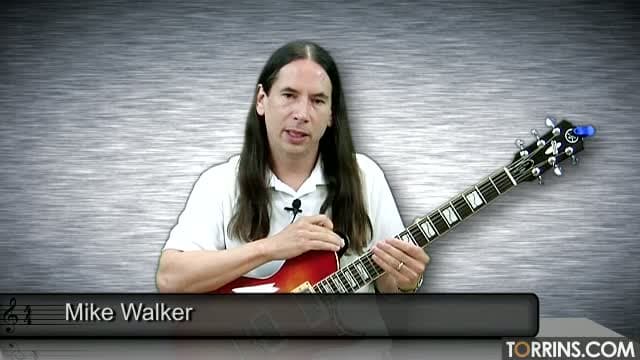
Introduction: In this introduction section Mike Walker your guitar instructor teaches you how to tune up the guitar for this song.
Song Arrangement: Here Mike shows you how to play the intro, midsection and the outro of the song. He shares his knowledge of guitar playing and how the intro is a 4 bar phase.
Overdub: Here, you will learn how to play the overdubs which come at the start of the song.
Song Demo: This is where you will learn how to play the entire song with the backing track to keep up guitar chords with the original time signature of the song.
Solo 1: Over here you will be learning how to play the first solo which is present right after the first bridge.
Outro Solo: This is the final part of this guitar lesson, here Mike is going to show you how to play outro solo.
Why Learn Bombtrack By Rage Against The Machine Song?
This is a pretty intricate song to learn that starts with simple yet heavy riffs, as a result, it is perfect for learning palm muting, power chord slides and even for practicing tight picking. This is one of the few songs from Rage Against the Machine which is beginner friendly, the guitar lesson that we have here is perfect for individuals who want to improve their riff-based playing.
FAQs – Bombtrack Guitar Lesson
Q1. Why is Range Against the Machine Controversial?
Ans. One of the biggest reasons why Rage Against the Machine is controversial is because of their fiercely political music that comes with sloganeering left-wing rants against the corporate culture of America.
Q2. How many BPM is Bombtrack?
Ans. This song is at 152 BPM; the song runs for 4 minutes and 3 seconds in the key of E and with a major mode.
Q3. Is Rage Against the Machine anti-capitalist?
Ans. Yes, that can be said for Rage Against the Machine because they have voiced their disagreement on various political, domestic and foreign policies that were introduced by the US government.
Q4. What is the heaviest Rage Against the Machine song?
Ans. Bullet in the Head is the heaviest song from Rage Against the Machine according to their fans. The song is a reference to how the government is trying to use the media to influence their control over the population.
Explore More in English Songs

Introduction
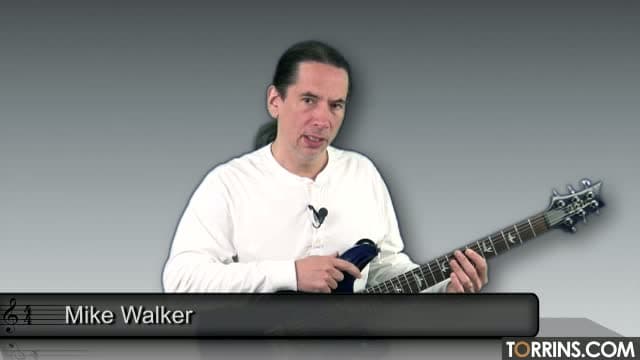
Join our expert instructor, Bobby Koeble, for an in-depth lesson on "Always With Me, Always With You" by Joe Satriani. This song is a lyrical masterpiece known for its challenging legato-style licks and smooth melodic phrasing. This intermediate to advanced-level lesson will walk you through every section of the song, helping you master both the technical and emotional elements that make it so iconic.
Interesting fact: Joe Satriani wrote "Always With Me, Always With You" as a heartfelt tribute to his wife. Unlike many of his other complex, high-energy tracks, this song stands out for its melodic simplicity and emotional depth. Satriani has said that the song represents a peaceful and constant connection with his wife, capturing the feeling of always being together no matter the distance.
Bobby has broken down the song lesson into various sections for a detailed understanding.
- Introduction
- Separate lessons for Solo section 1-6
- Conclusion and backing track
Chords Used
This song is in the key of B major and follows a 3/4 time signature. Some of the key chords used are:
- B11 – Uses the E string for added depth.
- E major – Bobby teaches a unique fingering that differs from standard chord shapes.
- G# minor and F#sus4 – Essential for the song’s harmonic feel.
Tune into the song lesson to learn the rest of the chords that make up this song.
Strumming Pattern
The rhythm of this song is signature to the tune. It follows a strict 8-note rhythm with incorporated techniques such as:
- Palm muting
- Arpeggios
- Sliding
Bobby also shares alternative ways to approach the rhythm so you can find what works best for you.
Song Structure
This song features a flowing, solo-driven structure:
Intro: It has a lyrical melody featuring legato-style licks
Solo Section 1: It is played in the key of B major and incorporates harmonics, vibrato, and sliding.
Solo Section 2: Moves higher up the neck and incorporates heavy use of vibrato and smooth phrasing.
Solo Section 3: This section has a harmony and melody change and is slightly longer and more complex. It introduces left-hand legato techniques.
Solo Section 4: Main melody moves up an octave and incorporates two-handed tapping.
Solo Section 5: It is the most rhythmically challenging part that includes double stops and varied phrasing.
Solo Section 6: Returns to the earlier melody with subtle variations in slide and inflexion. It has a fast legato-based lick to close out.
Outro: Bobby wraps up the lesson by playing along with the backing track
Why Learn This Song?
- Master left-hand legato techniques
- Develop precise control over sliding and vibrato
- Incorporate bluesy elements into your playing
- Build confidence with soloing and tapping
FAQs- Always With Me, Always With You Song Guitar Lesson
Q1. Is this song suitable for beginners?
No, this lesson is best for intermediate to advanced players due to the complex legato and tapping techniques.
Q2. How can I improve my sliding and vibrato?
Focus on timing and pressure consistency. Bobby shares detailed tips on mastering both.

Introduction
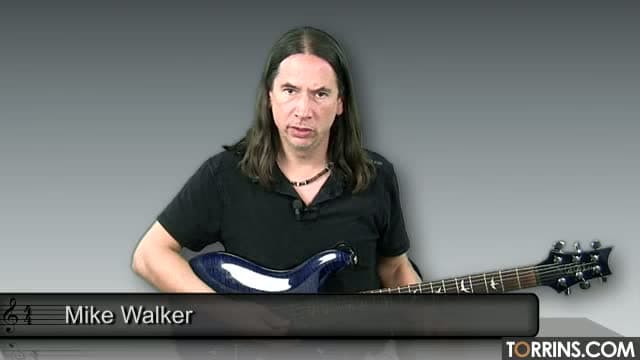
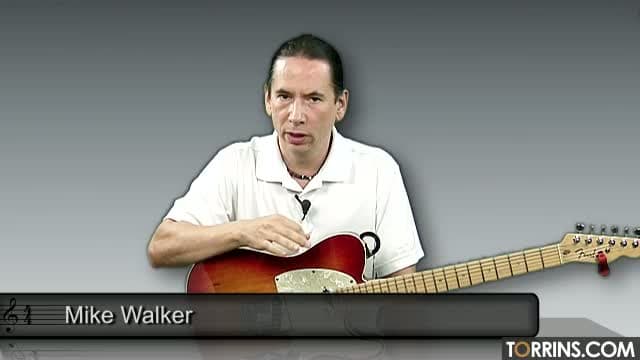
Tune into Torrins’ guitar song lesson on the iconic single by American rock band Guns N' Roses, Sweet Child O’ Mine. This chart-topping hard rock song is taught by our instructor, Mike Walker. He has broken down the lesson into 10 parts for a detailed understanding of each section and to make learning easier. Find dedicated lessons on the intro, verses, choruses, interlude solos, main solo, and outro.
Fun Fact: "Sweet Child O' Mine" was born out of a playful jam session at the band’s house. Slash was fooling around with a "circus" melody to make drummer Steven Adler laugh when Izzy Stradlin suggested turning it into a song. Within an hour, the band had crafted the core structure, and Axl Rose, inspired by his girlfriend Erin Everly, wrote the heartfelt lyrics by the following afternoon.
Chords Used in Sweet Child O' Mine Guitar Lesson
This song is played in half-step down tuning and features a mix of open chords and power chords. Some of the key chords used in the song include:
- C, D, Cadd9
- A power chord, Dsus4
Tune into the full lesson to learn all the chords and how to transition between them seamlessly.
Strumming Pattern
- Intermediate/advanced rhythm: Alternating strumming pattern with pull-off techniques for added depth
- A lick is layered over the chorus, and Mike walks you through how to blend it into the song smoothly
Song Structure
This song follows a well-defined verse-chorus format:
- Intro Riff – The iconic opening lick is based on a repetitive motion with just the first note changing. It’s repeated twice.
- Verse 1 & 2 – Follows an 8-bar phrase played twice using three chords. Incorporates a pull-off pattern. Mike breaks down the intricacies of the verses in great detail.
- Chorus – Mix of power chords and open chords like A power chord, C5, and Dsus4. A lick is played over the chorus for added texture.
- Solo 1 – The rhythm underneath the solo is half the length of the verse.
- Verse 2 – Similar to Verse 1.
- Chorus 2 – Same as Chorus 1.
- Solo 2 – A longer solo covering an entire verse.
- Chorus 3 – Double the length of the previous choruses.
- Outro Solo – Includes wah-wah pedal, hammer-ons, pull-offs, sliding, and some resting measures for dynamic effect.
Why Learn Sweet Child O' Mine?
This lesson covers not just the guitar parts but also the feel and dynamics that make the song iconic.
- Learn the nuances of Slash’s soloing style
- Improve your pull-offs and hammer-ons
- Master playing with a wah-wah pedal for expressive control
FAQs – Sweet Child O' Mine Guitar Lesson
Q1. Is this song beginner-friendly?
Ans: This lesson is ideal for intermediate and advanced players.
Q2. What’s the trick to mastering the intro riff?
Ans: Focus on the repetitive pattern and ensure the other strings are muted for a clean sound.

Similar Metal Songs



Introduction
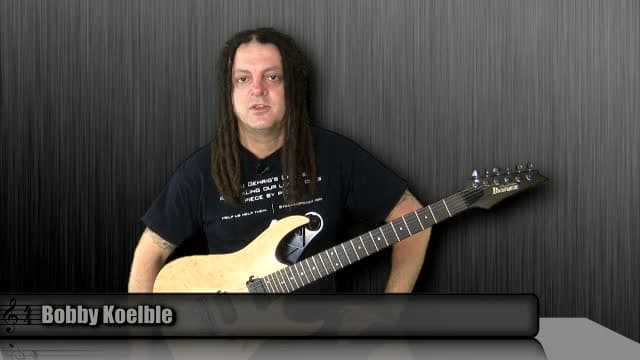
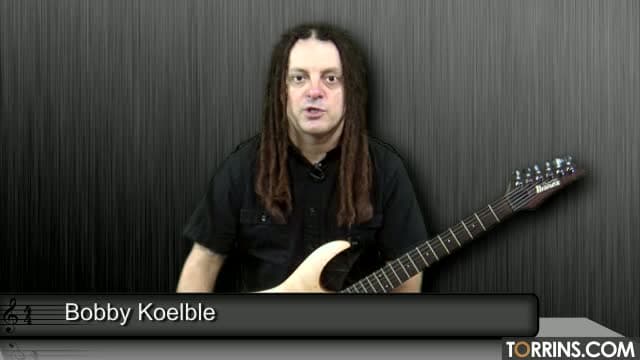
Get ready to master another death metal classic on Torrins—Symbolic by the band Death. This lesson is taught by Bobby Koelble himself, one of the guitarists on the original track. Bobby breaks down the song into several parts, covering essential chords, rhythms, and guitar tones, ensuring a detailed and engaging learning experience.
Fun Fact
Bobby Koelble joined Death after being recommended to Chuck Schuldiner, the band's co-founder, by a friend working at a local music store. Koelble and Schuldiner had known each other since high school in Orlando. After joining the band, Koelble toured with Death across the United States, Canada, Europe, and Japan before the band eventually disbanded.
Chords and Techniques Used in Symbolic
- Tuning: Standard tuning down a whole step
- Key: E minor
- Some of the chords used in this song are G#, F#, Bm, and A7. Tune in to the lesson to know the rest of the chords used in this song.
Song Structure
- Main Riff: The main riff repeats seven times and features vibrato, alternative picking, and palm muting. It includes a few power chords, one being G#.
- Chorus: The chorus riff follows the same pattern as the main riff but repeats 14 times. Tune in to the lesson for a detailed breakdown of the rest of the chorus.
- Solo Section: The solo section features four power chords. In this section, there’s a transition riff as well, which consists of four single notes and a power chord.
- Solo section played by Bobby in the original song: It is played in the key of F# and features chords like B minor, F# power chord, and A7—all diatonic to F#. He breaks down the solo into three sections: beginning, middle, and end and shares valuable tips on mastering the solo, including his creative process behind crafting the iconic riff.
Bobby plays all elements slowly, first to make it easier to follow, then repeats them at normal speed. He also explains the guitar tone in detail.
Why Learn Symbolic?
This lesson provides a detailed breakdown of one of death metal’s most iconic tracks. Bobby Koelble’s insight into the composition and technique will help you refine your alternative picking, palm muting, and power chord transitions. It's a challenging yet rewarding song to master for any metal guitarist. If you’re an advanced player or an intermediate player looking for songs to improve your techniques, this song has to be in your repertoire.
Tips to Improve Your Playing
- Start by playing the riffs at a slower pace, then gradually increase your speed.
- Pay close attention to the vibrato and palm muting techniques to capture the song’s unique tone.
- Focus on smooth chord transitions during the solo to maintain the song’s flow.
FAQs – Symbolic Guitar Lesson
Q1. Is this song suitable for beginners?
Ans: This lesson is recommended for intermediate to advanced players due to its fast-paced riffs and complex solos.
Q2. What tuning is used for this song?
Ans: The song is played in standard tuning down a whole step.
Introduction:
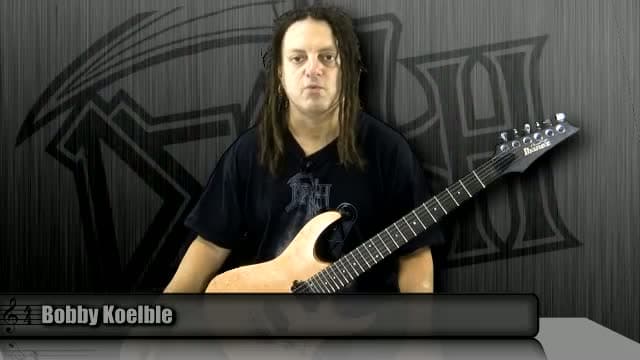
Torrins brings you an in-depth guitar lesson on Zero Tolerance by Death, taught by none other than Bobby Koelble—one of the original guitarists on the track. This lesson dissects the song’s intricate riffs, multiple solos, and unique techniques to help you master this classic death metal piece.
Fun Fact: The title Zero Tolerance was later used for two compilation albums released under Chuck Schuldiner’s name, featuring rare demo material from both Death and Control Denied.
Tuning and Song Structure
- Standard tuning, down a whole step.
- Multiple solos from both Chuck Schuldiner and Bobby Koelble.
- This Lesson is structured into key sections: Introduction, Intro Riff, Solo-1 (Chuck), Chorus, Bridge, Main Solos (Chuck & Bobby), Solo 2 (Bobby), Song Demo, and Final Note on Chorus.
- Make sure to use the provided chords and tabs to follow along!
Breaking Down the Song
Intro Riff
- Mostly in the key of E minor.
- Straightforward riff featuring power chords, including low E power chords.
- Incorporates muted string techniques for a tight and punchy sound.
First Solo (Chuck Schuldiner)
- Simple power chord progression in the background, one of which is C.
- Features an E minor major 7 arpeggio.
- Chuck was known for focusing on feel rather than strict technical terms—tune into the lesson for an in-depth breakdown!
Chorus
- Includes a riff and a melody.
- Has a slow tempo (for a Death song), making it one of the easier riffs to play.
- Features low E power chords, single notes, and palm-muted sections, along with other chords.
Bridge
- A relatively easy section featuring some power chords and palm-muted notes.
- Watch the lesson to master the additional chords!
Main Solo (Chuck Schuldiner)
- Opens with a harmonized melodic lick up the 3rd.
- Uses the A harmonic minor scale.
- Bobby shares valuable insights on writing melodic solos—a must-watch for aspiring songwriters.
Main Solo (Bobby Koelble)
- Played in F# minor.
- Starts with an introductory lick harmonized up a 5th, then shifts to a minor 3rd harmony.
- Solo is broken down into multiple digestible sections for easy learning.
Solo 2 (Bobby Koelble)
- A short but technical solo occurring between the verse and chorus.
- Starts with a C note and a tapped harmonic.
- This section covers artificial harmonics.
Final Note on Chorus
- Discusses the background chords heard in the final chorus.
- Bobby teaches unique finger positioning techniques to recreate the exact sound.
Song Demo & Summary
To wrap it all up, Bobby plays the full song with a backing track, demonstrating how all the sections come together.
Why Learn Zero Tolerance?
- Learn palm muting, power chord progressions, and harmonized melodies.
- Master multiple solo styles, from Chuck’s emotive phrasing to Bobby’s technical intricacies.
- Get valuable songwriting and soloing insights from an original artist of the song.
FAQs – Zero Tolerance Guitar Lesson
Q1. Is this lesson beginner-friendly?
- This lesson leans more towards intermediate to advanced players.
Q2. How can I improve my palm muting technique?
- Focus on muting with the side of your palm near the bridge while maintaining a tight, controlled attack.
Q3. Are tabs provided for the lesson?
- Yes! The chords and tabs included will help you nail every section.