Introduction and Tuning
B.Y.O.B. – Introduction
Welcome to the guitar lesson on one of the greatest anti-establishment rebellion songs that brings together metal, punk, and Middle Eastern melodies into a politically charged anthem. – B.Y.O.B. by System of a Down. The song has been received with love across the world and has won a Grammy for the best hard rock performance in 2006. The song has amassed more than 500 million views on YouTube since its release in 2005.
The song name is an acronym for Bring Your Own Bombs, and was made as a form of protest against the american coalition led Iraq War (2003–2011), with lyrics calling out, “Why don't presidents fight the war? Why do they always send the poor?”. It is a song written in strong political commentary on the situation of wars and oppression around the world. The band has a reputation for speaking out for social justice and matters like drug abuse, politics, and suicide in the heavy metal genre.
B.Y.O.B. Guitar Lesson
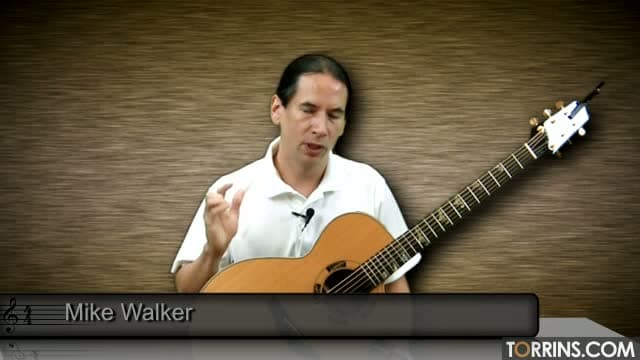
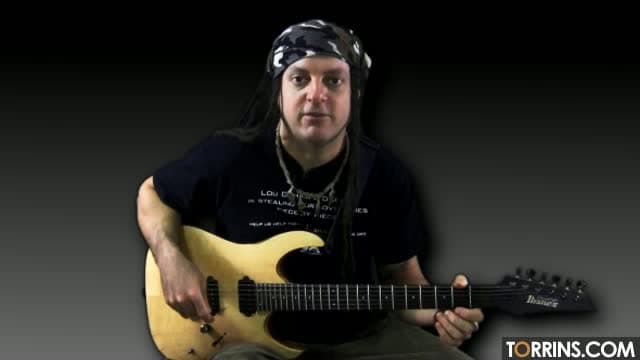
The lesson on B.Y.O.B. is brought to you by our beloved instructor, Mike Walker, who demonstrates the song in its entirety and explains all parts of the song in great detail. Since this is a heavy metal song, there are a number of unconventional rhythmic patterns and fast melodic lines for the electric guitar, which is a signature sound for this genre of music.
The song is in the key of F major, but the tuning is half a step down; all the strings are tuned down a semitone. This, firstly, widens or brightens the tone, which makes it feel ‘heavy’ and secondly, loosens the strings, which makes it easier to play at a high tempo.
The lesson is easier to master as it only requires rhythmic proficiency to play in its entirety. The song is very drums and lyrics forward, as is with most heavy metal songs. The song is fun to play because of the distorted tone of the guitar. It’s a saturated machine-like sound that has low-frequency notes, which give it a slightly percussive vibe, usually called ‘djent’.
This is also a short lesson, taught easily by Mike, comfortably suited for beginners and advanced players alike.
FAQs
Q. Can I play BYOB in standard tuning?
Yes, you can play BYOB in standard tuning, but then you’ll have to play the song in E major instead of F major, and you’ll also lose the ‘crunch’ in the strumming.
Q. How to sound like Daron Malakian?
If you want to sound like Malakian, you need an Ibanez Iceman DMM1 guitar, going into a Boss HM-2 Heavy Metal distortion pedal, into a Marshall MF350 amp.
Q. Can I play this on an acoustic guitar?
Yes, you can, but it will not have the rage that is needed to lead a rebellion against the war profiteering world leaders.
B.Y.O.B. – Introduction
Welcome to the guitar lesson on one of the greatest anti-establishment rebellion songs that brings together metal, punk, and Middle Eastern melodies into a politically charged anthem. – B.Y.O.B. by System of a Down. The song has been received with love across the world and has won a Grammy for the best hard rock performance in 2006. The song has amassed more than 500 million views on YouTube since its release in 2005.
The song name is an acronym for Bring Your Own Bombs, and was made as a form of protest against the american coalition led Iraq War (2003–2011), with lyrics calling out, “Why don't presidents fight the war? Why do they always send the poor?”. It is a song written in strong political commentary on the situation of wars and oppression around the world. The band has a reputation for speaking out for social justice and matters like drug abuse, politics, and suicide in the heavy metal genre.
B.Y.O.B. Guitar Lesson
The lesson on B.Y.O.B. is brought to you by our beloved instructor, Mike Walker, who demonstrates the song in its entirety and explains all parts of the song in great detail. Since this is a heavy metal song, there are a number of unconventional rhythmic patterns and fast melodic lines for the electric guitar, which is a signature sound for this genre of music.
The song is in the key of F major, but the tuning is half a step down; all the strings are tuned down a semitone. This, firstly, widens or brightens the tone, which makes it feel ‘heavy’ and secondly, loosens the strings, which makes it easier to play at a high tempo.
The lesson is easier to master as it only requires rhythmic proficiency to play in its entirety. The song is very drums and lyrics forward, as is with most heavy metal songs. The song is fun to play because of the distorted tone of the guitar. It’s a saturated machine-like sound that has low-frequency notes, which give it a slightly percussive vibe, usually called ‘djent’.
This is also a short lesson, taught easily by Mike, comfortably suited for beginners and advanced players alike.
FAQs
Q. Can I play BYOB in standard tuning?
Yes, you can play BYOB in standard tuning, but then you’ll have to play the song in E major instead of F major, and you’ll also lose the ‘crunch’ in the strumming.
Q. How to sound like Daron Malakian?
If you want to sound like Malakian, you need an Ibanez Iceman DMM1 guitar, going into a Boss HM-2 Heavy Metal distortion pedal, into a Marshall MF350 amp.
Q. Can I play this on an acoustic guitar?
Yes, you can, but it will not have the rage that is needed to lead a rebellion against the war profiteering world leaders.
Explore More in English Songs
Introduction:
Looking to learn one of the most heartfelt love ballads ever written? Then this song tutorial of Eric Clapton’s hit song is a must-watch for you. This "Wonderful Tonight" guitar lesson, taught by Mike Dugan, breaks down the song into an easy-to-follow tutorial that’s perfect for both beginners and advanced players. Mike teaches you how to sing as well as play the song.
Fun Fact: Eric Clapton wrote "Wonderful Tonight" while waiting for his then-girlfriend, Pattie Boyd, to get ready for an event. Despite its simplicity, the song became his most downloaded track on Spotify, with over 480 million streams!
Chords Used in "Wonderful Tonight"
This lesson is taught in the key of G major, and it primarily uses open chords, making it accessible to beginners. Some of the main chords include:
- G
- Em
- D/F#
The lesson also covers additional chords and variations—tune in to discover them all!
Strumming Pattern & Rhythm Techniques
- Beginner-Friendly Strumming: Basic downstrums to ensure smooth transitions between chords.
- Advanced Strumming: The tutorial also covers a more complex strumming pattern used in the original recording. This involves subdivisions, where each beat is split into four 16th notes, creating a rhythmic groove with an alternate strumming pattern (DUDUDU) with accents.
- Special Techniques: The instructor introduces a unique method for adding accents, perfect for players looking to elevate their rhythm skills. Tune in to the lesson to learn how to do it.
Song Structure Breakdown
This tutorial follows the song’s original structure, making it easier to follow:
- Intro (played twice)
- Verse 1
- Intro section again
- Verse 2
- Bridge
- Intro played twice
- Verse 3 with a tag ending
- Intro played twice to fade out
Tip: The intro shares a similar progression to the first part of the verse, making it easier to grasp.
Walk-Down Technique & Chord Transitions
One of the standout features of this lesson is the walk-down technique, where the bass notes descend smoothly between chords. Mike provides a step-by-step breakdown of positioning complex chord shapes and making smooth transitions.
Sing & Play Lesson
Want to sing while playing? This lesson dedicates a section to teaching how to play and sing simultaneously, helping learners match their strumming with the song’s vocal phrasing.
Final Play-Along & Bonus Lesson
- The lesson ends with a play-along section featuring a backing track, allowing learners to practice the entire song with professional accompaniment.
- For a more in-depth approach to playing "Wonderful Tonight" in an authentic style, check out Steve Luciano’s version, which focuses on the intricacies of the guitar work of the song.
FAQs – "Wonderful Tonight" Guitar Lesson
Q1. Is this song beginner-friendly?
Yes! With just a few open chords and a straightforward rhythm, it’s perfect for beginners.
Q2. How can I improve my strumming for this song?
Start with basic downstrums, then work on the subdivided 16th-note pattern with accents for a more authentic feel.







Introduction:
Torrins brings you another heartfelt guitar song lesson I Will Be Here by Steven Curtis Chapman, taught by J.J. Pattishall. This lesson focuses on fingerpicking, chord transitions, and rhythm techniques, making it a great song to develop both your picking accuracy and emotional expression.
Interesting Fact: This song carries deep personal meaning. Chapman wrote it as a promise to his wife during a difficult time when his parents were going through a divorce. It became one of his most beloved songs, offering reassurance and commitment through its lyrics and melody.
Chords & Song Structure
This lesson breaks the song into easy-to-follow sections: Intro & Verse, Chorus, Bridge, Song Demo, Rhythm, and Sing & Play.
Capo is on the 1st fret
Key used is D (relative to capo), actual tuning is Eb
Chords Used:
- Intro & Verse: Dsus2, A7sus4, Bm (a barre chord), Em7, and others
- Chorus: Bm/A, A/G, D/F#, and more
- Bridge: Includes a diminished chord and a piano/instrumental section
J.J. shares some alternatives for the difficult chords such as barre chords.
The chords are arpeggiated, giving the song its signature flow. J.J. carefully explains finger placement and picking techniques to help you achieve the song’s delicate feel.
Fingerpicking & Rhythm Patterns
This song features a beautiful fingerpicking pattern. J.J. breaks it down in detail, ensuring that even beginners can grasp the technique.
For those who find fingerpicking challenging, he also introduces two basic rhythm patterns as an alternative:
- DDUDDUDDUD – A straightforward strumming pattern
- DDUUDDDUUD – Adds syncopation for a more dynamic feel
Verse, Chorus & Bridge Breakdown
- Intro & Verse: J.J. carefully walks through the arpeggiated chords and explains how to maintain a steady rhythm. He also shares a technique to create a flowing fingerpicking style.
- Chorus: The transitions between chords like Bm/A, F#, A/G, and D/F# are broken down step by step. He highlights turnarounds, ensuring smooth movement between sections.
- Bridge: Features a diminished chord, adding tension and resolution to the song. J.J. also explains the piano and instrumental section.
Sing & Play – Coordinating Vocals & Guitar
This lesson doesn’t just teach you how to play the guitar part—it also helps you combine playing with singing. J.J. explains:
- How to sync your strumming or fingerpicking with the lyrics
- Phrasing techniques to match the melody with chord changes
- How to make the song your own while staying true to its essence
Final Song Demo & Play-Along
To bring everything together, J.J. performs the song with a backing track, reinforcing all the techniques covered in the lesson. This play-along section lets you practice along and refine your timing and transitions.
Why Learn I Will Be Here?
- Develops fingerpicking skills – great for improving coordination and technique
- Enhances chord transitions – teaches smooth movement between complex shapes
FAQs – I Will Be Here Guitar Lesson
Q1: Is this lesson beginner-friendly?
Yes! While the fingerpicking and chord shapes may seem tricky at first, J.J. provides simplified alternatives and a step-by-step breakdown.
Q2: Can I strum instead of fingerpick?
Absolutely. J.J. introduces two strumming patterns for those who prefer a rhythmic approach.
Q3: Do I need a capo?
Yes, place the capo on the 1st fret to match the song’s key.
Similar Rock Songs

Introduction
Join our expert instructor, Bobby Koeble, for an in-depth lesson on "Always With Me, Always With You" by Joe Satriani. This song is a lyrical masterpiece known for its challenging legato-style licks and smooth melodic phrasing. This intermediate to advanced-level lesson will walk you through every section of the song, helping you master both the technical and emotional elements that make it so iconic.
Interesting fact: Joe Satriani wrote "Always With Me, Always With You" as a heartfelt tribute to his wife. Unlike many of his other complex, high-energy tracks, this song stands out for its melodic simplicity and emotional depth. Satriani has said that the song represents a peaceful and constant connection with his wife, capturing the feeling of always being together no matter the distance.
Bobby has broken down the song lesson into various sections for a detailed understanding.
- Introduction
- Separate lessons for Solo section 1-6
- Conclusion and backing track
Chords Used
This song is in the key of B major and follows a 3/4 time signature. Some of the key chords used are:
- B11 – Uses the E string for added depth.
- E major – Bobby teaches a unique fingering that differs from standard chord shapes.
- G# minor and F#sus4 – Essential for the song’s harmonic feel.
Tune into the song lesson to learn the rest of the chords that make up this song.
Strumming Pattern
The rhythm of this song is signature to the tune. It follows a strict 8-note rhythm with incorporated techniques such as:
- Palm muting
- Arpeggios
- Sliding
Bobby also shares alternative ways to approach the rhythm so you can find what works best for you.
Song Structure
This song features a flowing, solo-driven structure:
Intro: It has a lyrical melody featuring legato-style licks
Solo Section 1: It is played in the key of B major and incorporates harmonics, vibrato, and sliding.
Solo Section 2: Moves higher up the neck and incorporates heavy use of vibrato and smooth phrasing.
Solo Section 3: This section has a harmony and melody change and is slightly longer and more complex. It introduces left-hand legato techniques.
Solo Section 4: Main melody moves up an octave and incorporates two-handed tapping.
Solo Section 5: It is the most rhythmically challenging part that includes double stops and varied phrasing.
Solo Section 6: Returns to the earlier melody with subtle variations in slide and inflexion. It has a fast legato-based lick to close out.
Outro: Bobby wraps up the lesson by playing along with the backing track
Why Learn This Song?
- Master left-hand legato techniques
- Develop precise control over sliding and vibrato
- Incorporate bluesy elements into your playing
- Build confidence with soloing and tapping
FAQs- Always With Me, Always With You Song Guitar Lesson
Q1. Is this song suitable for beginners?
No, this lesson is best for intermediate to advanced players due to the complex legato and tapping techniques.
Q2. How can I improve my sliding and vibrato?
Focus on timing and pressure consistency. Bobby shares detailed tips on mastering both.