
Solo 1
Fear of the Dark - Introduction
Fear of the Dark is one of Iron Maiden’s most famous songs, released in 1992 on the album of the same name. Written by bassist Steve Harris, it explores the fear of darkness and the unknown. The song starts slow and eerie, then explodes into fast, heavy riffs. It became a fan favourite, especially in live shows where the crowd sings along.
The lyrics describe the creeping fear of being alone in the dark, where every shadow feels threatening. Bruce Dickinson’s powerful vocals and the twin-guitar harmonies make it unforgettable. The song’s structure is dynamic; starting quietly, building tension, then bursting into full energy. It remains one of their most-streamed tracks today.
Fear of the Dark Guitar Lesson
Taught by Mike Walker, this lesson breaks down the song’s F major to D minor shifts. The intro uses clean arpeggios (F - C - Dm - Bb) before the heavy riff kicks in. The main riff is in D minor, played with palm muting for a tight sound. The tempo starts at 80 BPM but speeds up later.
The verse has a chugging rhythm (D5 - C5 - Bb5), while the chorus opens up with power chords (F5 - C5 - D5 - Bb5). The solos use the D harmonic minor scale (D-E-F-G-A-Bb-C#), giving them a dark, dramatic feel. The twin-guitar harmonies are a key feature—two guitars play different but matching melodies.
For the solos, Dave Murray and Adrian Smith use the D harmonic minor scale (D-E-F-G-A-Bb-C#). This scale gives the leads their dramatic, almost classical sound. The twin-guitar harmonies are a key feature—one guitar plays a melody while the other plays a matching part at a different pitch. These harmonies use intervals of thirds and sixths to create that classic Iron Maiden sound.
The bridge section before the final chorus has a rhythm part with quick chord changes. Here, you switch between D5 - F5 - C5 - Bb5 in rapid succession. The key is to keep your palm muting consistent while moving between chords. The song ends with a repeat of the intro arpeggios.
Beginners should start by learning the power chord shapes and the galloping rhythm pattern. Practice the palm muting to get that tight, punchy sound. Intermediate players can work on the twin-guitar harmonies—try recording one part and playing the other over it. Advanced players should focus on the vibrato and bends in the solos, which need to be precise to match the original recording.
FAQs
Q. What tuning does Iron Maiden use for this song?
Standard tuning (EADGBE), though they sometimes play it half-step down live.
Q. How do I play the rhythm correctly?
Use downstrokes on the main beats and upstrokes in between (down-down-up). Start slow with a metronome.
Q. Why does the solo sound so dramatic?
It uses the D harmonic minor scale, which has a raised 7th note (C# instead of C natural).
Q. Can I play this song on a single guitar?
Yes, but you’ll miss the harmonies. Try recording one guitar part and playing the other over.
Fear of the Dark - Introduction
Fear of the Dark is one of Iron Maiden’s most famous songs, released in 1992 on the album of the same name. Written by bassist Steve Harris, it explores the fear of darkness and the unknown. The song starts slow and eerie, then explodes into fast, heavy riffs. It became a fan favourite, especially in live shows where the crowd sings along.
The lyrics describe the creeping fear of being alone in the dark, where every shadow feels threatening. Bruce Dickinson’s powerful vocals and the twin-guitar harmonies make it unforgettable. The song’s structure is dynamic; starting quietly, building tension, then bursting into full energy. It remains one of their most-streamed tracks today.
Fear of the Dark Guitar Lesson
Taught by Mike Walker, this lesson breaks down the song’s F major to D minor shifts. The intro uses clean arpeggios (F - C - Dm - Bb) before the heavy riff kicks in. The main riff is in D minor, played with palm muting for a tight sound. The tempo starts at 80 BPM but speeds up later.
The verse has a chugging rhythm (D5 - C5 - Bb5), while the chorus opens up with power chords (F5 - C5 - D5 - Bb5). The solos use the D harmonic minor scale (D-E-F-G-A-Bb-C#), giving them a dark, dramatic feel. The twin-guitar harmonies are a key feature—two guitars play different but matching melodies.
For the solos, Dave Murray and Adrian Smith use the D harmonic minor scale (D-E-F-G-A-Bb-C#). This scale gives the leads their dramatic, almost classical sound. The twin-guitar harmonies are a key feature—one guitar plays a melody while the other plays a matching part at a different pitch. These harmonies use intervals of thirds and sixths to create that classic Iron Maiden sound.
The bridge section before the final chorus has a rhythm part with quick chord changes. Here, you switch between D5 - F5 - C5 - Bb5 in rapid succession. The key is to keep your palm muting consistent while moving between chords. The song ends with a repeat of the intro arpeggios.
Beginners should start by learning the power chord shapes and the galloping rhythm pattern. Practice the palm muting to get that tight, punchy sound. Intermediate players can work on the twin-guitar harmonies—try recording one part and playing the other over it. Advanced players should focus on the vibrato and bends in the solos, which need to be precise to match the original recording.
FAQs
Q. What tuning does Iron Maiden use for this song?
Standard tuning (EADGBE), though they sometimes play it half-step down live.
Q. How do I play the rhythm correctly?
Use downstrokes on the main beats and upstrokes in between (down-down-up). Start slow with a metronome.
Q. Why does the solo sound so dramatic?
It uses the D harmonic minor scale, which has a raised 7th note (C# instead of C natural).
Q. Can I play this song on a single guitar?
Yes, but you’ll miss the harmonies. Try recording one guitar part and playing the other over.
Explore More in English Songs



Introduction:
Learn to play Elmore James' version of "It Hurts Me Too" with this detailed guitar lesson on Torrins.com taught by our instructor Mike Dugan. This classic 8-bar blues song features soulful melodies, a walking bassline, and the Delta blues technique, making it a must-learn for blues enthusiasts. This lesson includes chords, rhythm techniques, solo breakdowns, and a full song demo, with tabs and lyrics provided for a complete learning experience.
Fun Fact:
"It Hurts Me Too" is one of the most interpreted blues songs ever! Originally recorded by Tampa Red in 1940, Elmore James' recorded it once in 1957 and then in 1962. His 1962 version became a hit, staying on the Hot Rhythm & Blues Singles chart for eight weeks and even making its way to Billboard’s Bubbling Under Hot 100 Singles chart two years after his passing.
Chords & Rhythm in "It Hurts Me Too"
- Key: D
- Chords Used: D7, A7, and others. Tune into the lesson to learn the rest of the chords used.
- Rhythm Pattern: DUDDUDDUDDUD (He also teaches an alternative positioning for a different feel.
- For advanced players, a Chuck Berry-style rhythm is introduced to add a more dynamic groove.
- The Delta blues technique is broken down in detail, ensuring you capture the authentic blues sound.
Sing & Play Section
- The lesson covers how to match vocals with chord changes and maintain steady downbeat strumming.
- The punchline of each verse remains the same, making it easier to follow along while singing.
Solo Breakdown
- The solo begins in the D major blues scale, bringing a bright and melodic sound.
- After a few measures, it shifts into D minor pentatonic, adding emotional depth and contrast.
- Mike Dugan explains this major-to-minor blues transition, a technique that gives the song its signature feel.
Song Demo
- In this final section, Mike plays the full song with a backing track, bringing together all elements learned in the lesson. Follow along with him to learn the intricacies of this song perfectly.
Why Learn "It Hurts Me Too"?
This lesson is a great way to improve blues phrasing, rhythm control, and soloing techniques. Whether you're a beginner looking to learn essential blues progressions or an advanced player eager to refine your Delta blues technique, this song is an excellent addition to your repertoire.
FAQs – "It Hurts Me Too" Guitar Lesson
Q1. Is this lesson beginner-friendly?
Yes! The song uses simple chords, and the lesson breaks everything down step by step, making it accessible for all skill levels.
Q2. Can I play the song without singing?
Absolutely! The lesson teaches the instrumental parts separately, so you can focus on mastering the guitar before adding vocals.
Q3. How do I improve my blues soloing?
This lesson introduces a major-to-minor blues shift, a great technique for creating emotional and expressive solos. Practice this transition to add more depth to your playing. Moreover, you can also check out our in-depth Blues Guitar lessons to improve your skills.

Similar Metal Songs
Introduction:
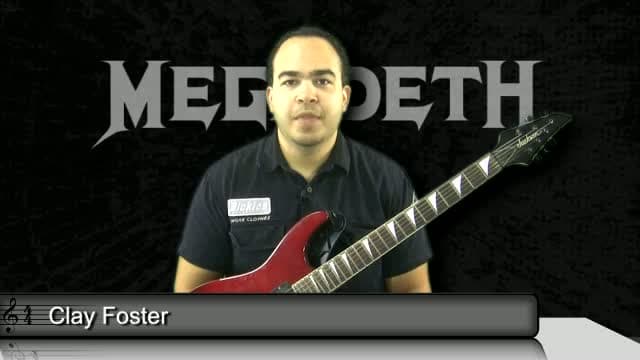
Torrins brings you an electrifying guitar lesson—Symphony of Destruction by Megadeth, taught by Clay Foster. This heavy-hitting metal track is part of our guitar song lesson series and is broken down into easy-to-follow sections.
Fun Fact: In an interview, vocalist Dave Mustaine shared that the lyrics for Symphony of Destruction were sparked by a headache he got while driving home. He scribbled the first lines on the back of a sushi receipt—“My metal brain’s corroding, my head is going to explode.” That spontaneous moment led to one of Megadeth’s most iconic songs, recorded on their fifth studio album Countdown to Extinction in 1992.
Song Arrangement
The song is taught in separate segments so you can master each part before moving to the next.
The song is in the key of E.
Verse
Verse is built around the F power chord and an open E power chord, along with other chords.
Downstrokes and palm muting are used in the verse—make sure to mute the strings to avoid letting notes ring out too long. Clay shares techniques like using your thumb or extra fingers to stop the sound cleanly.
Pre-Chorus
Features open palm muting and chromatic downs, creating that tight, chugging rhythm. Our lessons have a 3-angle video setup so you can clearly see hand positions and copy along easily.
Chorus
This section opens up with ringing E chords and a chromatic descending run. Chords like Bb, G#, and the D power chord makes the chorus sound more intense. Though it’s slightly more complex than the verse, Clay carefully breaks down the finger positioning and covers some fingerpicking techniques to help you through it.
After the first chorus, the main riff returns and leads into the second verse and pre-chorus, just like earlier.
The second chorus is a bit longer. The first half mirrors the first chorus, while the second half introduces new elements. Clay walks you through the difference so you can follow along confidently.
Solo Lesson
Clay breaks down the guitar solo into manageable sections.
- The first part has a bluesy riff with vibrato, bending, and palm muting.
- The second part is a 16-note rhythmic figure built around the Am6 chord, featuring some sliding techniques.
- Tune into the lesson to learn each section in detail and pick up essential phrasing skills along the way.
Sound and Tone
To capture the song’s feel, Clay dives into the tone settings. The tone is mid-rangy, which is a signature sound of Marty Friedman. Clay recommends listening to some of Friedman’s work to understand the sweet, expressive tone he’s known for.
For gear settings, Clay suggests using the middle pickup to replicate that tone more accurately.
Song Demo
The lesson wraps up with a full song demo, where Clay ties everything together. You can play along with him to practice transitions, polish your technique, and check your accuracy in real time.
FAQs – Symphony of Destruction Guitar Lesson
Q1: Is this song beginner-friendly?
Yes. While it has a few technical sections, the lesson breaks everything down clearly and provides enough guidance for newer players.
Q2: Do I need specific gear for the tone?
Clay suggests using a mid-range-focused setting with the middle pickup to get closer to Marty Friedman's tone. However, you can start with what you have and tweak as needed.
Q3: Is the solo hard to learn?
It’s approachable when broken into parts. Clay walks you through each phrase, so with some practice, you’ll be able to nail it.

Introduction
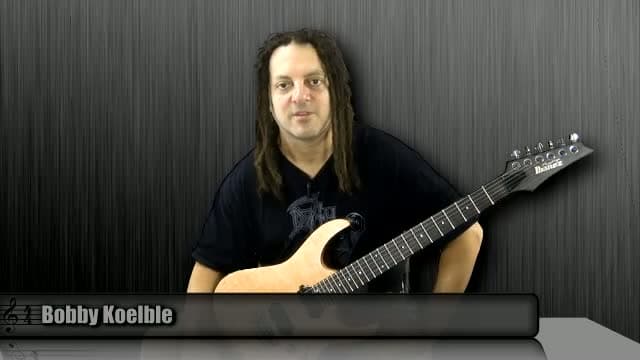
Get ready to master another death metal classic on Torrins—Symbolic by the band Death. This lesson is taught by Bobby Koelble himself, one of the guitarists on the original track. Bobby breaks down the song into several parts, covering essential chords, rhythms, and guitar tones, ensuring a detailed and engaging learning experience.
Fun Fact
Bobby Koelble joined Death after being recommended to Chuck Schuldiner, the band's co-founder, by a friend working at a local music store. Koelble and Schuldiner had known each other since high school in Orlando. After joining the band, Koelble toured with Death across the United States, Canada, Europe, and Japan before the band eventually disbanded.
Chords and Techniques Used in Symbolic
- Tuning: Standard tuning down a whole step
- Key: E minor
- Some of the chords used in this song are G#, F#, Bm, and A7. Tune in to the lesson to know the rest of the chords used in this song.
Song Structure
- Main Riff: The main riff repeats seven times and features vibrato, alternative picking, and palm muting. It includes a few power chords, one being G#.
- Chorus: The chorus riff follows the same pattern as the main riff but repeats 14 times. Tune in to the lesson for a detailed breakdown of the rest of the chorus.
- Solo Section: The solo section features four power chords. In this section, there’s a transition riff as well, which consists of four single notes and a power chord.
- Solo section played by Bobby in the original song: It is played in the key of F# and features chords like B minor, F# power chord, and A7—all diatonic to F#. He breaks down the solo into three sections: beginning, middle, and end and shares valuable tips on mastering the solo, including his creative process behind crafting the iconic riff.
Bobby plays all elements slowly, first to make it easier to follow, then repeats them at normal speed. He also explains the guitar tone in detail.
Why Learn Symbolic?
This lesson provides a detailed breakdown of one of death metal’s most iconic tracks. Bobby Koelble’s insight into the composition and technique will help you refine your alternative picking, palm muting, and power chord transitions. It's a challenging yet rewarding song to master for any metal guitarist. If you’re an advanced player or an intermediate player looking for songs to improve your techniques, this song has to be in your repertoire.
Tips to Improve Your Playing
- Start by playing the riffs at a slower pace, then gradually increase your speed.
- Pay close attention to the vibrato and palm muting techniques to capture the song’s unique tone.
- Focus on smooth chord transitions during the solo to maintain the song’s flow.
FAQs – Symbolic Guitar Lesson
Q1. Is this song suitable for beginners?
Ans: This lesson is recommended for intermediate to advanced players due to its fast-paced riffs and complex solos.
Q2. What tuning is used for this song?
Ans: The song is played in standard tuning down a whole step.
Introduction:
Torrins brings you another electrifying guitar lesson "Crystal Mountain by Death", taught by none other than Bobby Koelble, one of the original guitarists on the track. This lesson breaks down the intricate riffs, solos, and powerful progressions that make this song a metal masterpiece.
Fun Fact: Crystal Mountain was inspired by Chuck Schuldiner’s real-life experiences with his not-so-friendly next-door neighbour. Their unpleasant interactions fueled the aggression and emotion behind this legendary track!
Tuning & Gear
- Tuning: Standard tuning down a whole step.
- Use the provided tabs for a more comprehensive learning experience.
Song Breakdown
This lesson is structured into multiple sections to make learning seamless:
- Introduction
- Intro Riff
- Verse
- Chorus
- Bridge
- Solo-Tapping Section
- Main Solo
- Acoustic Solo
- Song Demo (Chuck’s Part)
- Song Demo (Bobby’s Part)
- Full Song Demo (Combining All Parts)
Chords & Riffs in Crystal Mountain
Intro Riff
- The first 8 bars feature power chords like E, Bb, and F, with vibrato. Tune in to the lesson to learn the rest of the chords.
- The second half of the intro is harmonised down a perfect 5th.
- Scale: E Harmonic Minor.
Verse
- The Am chord is played with a variation in arpeggio.
- Includes F power chords and some single notes, along with other chords.
- Heavy distortion is used to achieve that signature Death sound.
Chorus
- Chorus features single notes and an active midsection involving the open 5th string.
- Chuck Schuldiner added an intricate melody over the chorus section. Bobby walks you through this in detail.
Bridge
- It begins with power chords in the rhythm track.
- It is layered with harmonised single-note phrases on top
Solo Sections
Tapping Solo
- This solo features harmonised tapping licks at the 12th fret.
Main Solo
- Chuck’s solo—short but iconic.
- It is in the key of G# minor.
- Uses triplets and expressive vibrato.
Acoustic Solo
- An acoustic solo is a rare touch in a Death song! Bobby demonstrates 4 simple acoustic licks to round off the song.
Final Song Demo
After breaking down every section, Bobby dedicates three lessons to the song demo:
- Chuck’s part
- His own part
- The full song, combining all elements
Why Learn Crystal Mountain?
- Learning this song will help you master intricate picking techniques.
- It will also help you understand harmonised riffs and solos.
- It will expand your knowledge of scales and metal phrasing.
FAQs – Crystal Mountain Guitar Lesson
Q1. Is this lesson suitable for beginners?
A: This lesson is best suited for intermediate to advanced players because of its complex chords and solos.
Q2. What is the most challenging part of the song?
A: The solo-tapping section and harmonised melodies require precise technique and practice.
Q3. Can I play this without tuning down?
A: Yes, you can, but tuning down a whole step helps achieve the authentic Death sound.
If You Like Iron Maiden, You'll Love These
Introduction
Tune into a guitar lesson on the classic heavy metal song "The Trooper" brought to you by Torrins, led by our expert instructor, Bobby Koeble. This song by the English heavy metal band Iron Maiden was released in 1983, and a live version of the song was issued in 2005.
Fun Fact: "The Trooper" by Iron Maiden was inspired by the famous Charge of the Light Brigade during the Crimean War in 1854. The song’s lyrics are based on Alfred, Lord Tennyson’s poem of the same name, which describes the bravery and tragic loss of British cavalry who were misled into a deadly Russian artillery ambush. The intense galloping rhythm of the song reflects the chaos and urgency of the battlefield charge.
Bobby breaks down this classic song lesson into the following parts to ensure a smooth learning experience for learners:
Introduction
Intro Riff
Main Riff & Verse
Chorus & Song Arrangement
Solo 1- Part 1 & 2
Rhythm for Solos
Solo 2
Solo 2 using Whammy Bars
Discussion & Conclusion
Trooper with Backing Track
Chords Used in The Trooper Guitar Lesson
- Most of the song is in the key of E or E minor with a 4/4 time signature. Bobby plays the song in standard tuning.
- The chorus uses a D chord followed by a low E power chord.
- The solos are in the key of A minor and use chords like G, and F, along with others.
- There are harmony parts in the intro and main riffs, with techniques like pull-offs and whammy bar used in the solos.
Strumming Pattern
- The song follows a fast-paced, galloping rhythm—a signature Iron Maiden style.
- Bobby breaks down the strumming pattern and offers options for handling the harmony in the intro.
- Beginners can start with a simple downstroke rhythm, while more advanced players can work on refining the galloping feel.
Song Structure
The song unfolds with a clear and consistent progression that keeps listeners engaged from start to finish. It kicks off with a high-energy intro riff, a fast-paced harmony section that repeats four times to set the tone. This leads into the main riff and verse, where the finger placements and note sequences are broken down for easy understanding.
From there, the momentum builds into the chorus, which delivers a bold shift in rhythm and mood. After returning briefly to the main harmony riff, the song moves into the second verse, introducing a slight rhythmic variation with a galloping feel that adds fresh texture.
The next pass through the chorus sets the stage for not just one, but two solo sections, each packed with expressive phrasing and technique. After the solos, the main harmony riff reappears, anchoring the listener before launching into the third and final verse. Finally, the track winds down with an outro that circles back to the familiar intensity of the intro, bringing the piece full circle with a satisfying sense of closure.
Improvisation Techniques
- The solos are played in A minor.
- Solo 2 includes whammy bar technique for added depth and expression.
Bobby ends the lesson by playing along with a backing track—a great way to practice and refine your playing.
FAQs – The Trooper Guitar Lesson
Q1. Is this song suitable for beginners?
It’s more suited for intermediate players due to the fast-paced rhythm and advanced solo work.
Q2. What’s the key challenge in this song?
The galloping rhythm and smooth chord transitions require precision and practice.
Q3. Do I need a special tuning?
No, the song is played in standard tuning.