Livin on a Prayer
Introduction
Song Arrangement Part 1
Song Arrangement Part 2
Song Demo
Solo Lesson
Unlock Full Access to Lyrics & Chords with Torrins Membership
Unlock with premiumNo Description Available
Livin on a Prayer
Introduction
Song Arrangement Part 1
Song Arrangement Part 2
Song Demo
Solo Lesson
Unlock Full Access to Lyrics & Chords with Torrins Membership
Unlock with premiumExplore More in English Songs











Introduction:
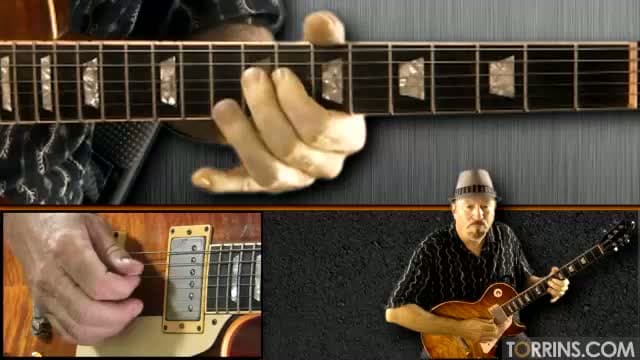
Torrins brings you an exciting lesson on The Thrill Is Gone, the legendary blues song made famous by B.B. King. Taught by Mike Dugan, this lesson is perfect for those looking to master both rhythm and lead guitar in a blues setting. You'll learn everything from chords and rhythm to soulful lead fills and solo techniques.
Fun Fact: While most people associate "The Thrill Is Gone" with B.B. King, the song was originally written and recorded by Roy Hawkins and Rick Darnell. However, B.B. King’s version became a massive hit, earning him a Grammy Award for Best Male R&B Vocal Performance in 1970 and a spot in the Grammy Hall of Fame in 1998.
Chords & Rhythm
This lesson starts by breaking down the essential chords used in the song. The song is in the key of B minor, incorporating barre chords like Em, F#7, and others in a 12-bar blues progression. Mike explains the finger placements for each chord, ensuring clarity for both beginners and advanced players.
The rhythm follows a straightforward 4-feel, meaning it doesn’t use shuffle or swing. Mike provides an easy method to simplify the rhythm, explaining the accents and muting techniques that bring the groove to life.
Sing and Play Technique
One of the key elements of this song is matching vocals with guitar playing. The song follows a typical blues structure where the first line is repeated, making it essential to synchronize your playing with the melody. Mike shares helpful tips on keeping time and smoothly integrating vocals with guitar.
Solo & Lead Fills
Next, we dive into the iconic solo heard in the introduction. The solo is based on the B minor pentatonic scale, and Mike walks through each lick, ensuring you understand the phrasing and feel that make B.B. King’s style so expressive.
Following the solo lesson, the instructor covers lead fills, which are played in between vocal phrases. He sticks to the B minor pentatonic scale, showing how to create emotional lead parts.
Song Demo & Final Arrangement
The lesson concludes with a full song demo, allowing you to hear all the elements come together. The final arrangement follows the classic 12-bar blues progression, with a structure of intro, two verses, solo, two verses, and outro. Mike plays along with the backing track, reinforcing everything covered in the lesson.
Why Learn "The Thrill Is Gone"?
- Great way to practice 12-bar blues progressions.
- Helps improve lead guitar phrasing and soloing.
- Perfect for learning how to sing and play simultaneously.
FAQs -The Thrill Is Gone Guitar Lesson
Q1. Is this song beginner-friendly?
Yes! While some barre chords are involved, Mike provides tips to make them easier.
Q2. Do I need a capo for this lesson?
No capo is required!
Q3. What’s the best way to practice lead fills?
Start slow and break the fills into smaller sections. Play along with the backing track to develop feel and timing.

Similar Rock Songs

Introduction:
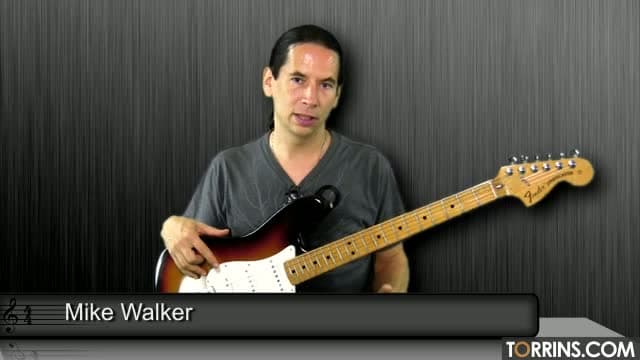
Torrins brings you a detailed lesson on Hotel California by The Eagles, taught by Mike Walker. This song is a rock guitar masterpiece, featuring multiple guitar parts, intricate solos, and the signature 12-string acoustic intro that every guitarist wants to master.
To ensure a smooth learning experience, this lesson includes tabs and lyrics and breaks down each guitar part step by step.
Fun Fact: In 1998, during their induction into the Rock and Roll Hall of Fame, all seven Eagles members performed Hotel California together for the only time ever.
Chords, Rhythm, & Song Arrangement
This lesson covers multiple guitar parts, from acoustic rhythm to electric lead work.
- Guitar 1: The 12-string acoustic intro played by Steve Luciano.
- Guitar 2: Played on an acoustic guitar, covering the main chord progression with precise picking patterns. This part starts with an open D chord and moves through a D major triad.
- Chords Used: D, Em, F#m, Bm, and more. Mike breaks down which strings to leave open and which to mute for the perfect sound.
- Guitar 3 (Reggae Section): A muted electric guitar rhythm that appears in the verse section. Played in the key of B minor, with movable F# and E9 chords. It also has some inverted chords. The strumming pattern follows a downstroke with an open fretboard, followed by a down-up motion. Tune into the learn it seamlessly by the pro!
- Guitar 4 (Muted Clean Part): A subtle section that introduces muting techniques and power chords, adding to the song's dynamic feel.
- Guitar 5 & Guitar 6: These sections introduce lower and higher harmonies, reinforcing the layered guitar arrangement.
Mike walks through each of these sections in detail, ensuring you can replicate the exact feel of the original recording.
Lead Guitar-Licks & Solos
- Overdub Licks: The first chorus features a double-stop lick with hammer-ons and pinch harmonics.
- Three Guitar Solos: The solos blend B minor pentatonic, B minor, and B harmonic minor scales. Some licks focus on bends, slides, and expressive phrasing.
- Outro Solo: Features two interwoven guitar parts, with the first part built around arpeggios like the B minor arpeggio.
Mike takes you through each solo note by note, showing how to nail the tone and phrasing of this legendary song.
Beginner-Friendly Chord Progression
If you're not ready to tackle all the guitar layers, Mike provides a simplified chord progression that lets beginners play along with the song.
- Chords Used: A, E, F#m, Em, and others.
- Alternative Strumming Pattern: A beginner-friendly rhythm variation to match the song’s feel.
Why Learn Hotel California?
- Essential for Rock Guitarists – It is one of the most recognizable intros and solos in rock history.
- Teaches Advanced Techniques – This song includes various techniques like fingerpicking, muting, harmony lines, and expressive soloing.
- Perfect for Rhythm & Lead Players – The song covers both acoustic strumming and intricate lead work.
FAQs – Hotel California Guitar Lesson
Q1: Is this lesson beginner-friendly?
While the original song is challenging, the lesson includes simpler chord progressions and rhythm parts for beginners.
Q2: What techniques will I learn?
Muted strumming, harmony playing, arpeggios, lead phrasing, and solo improvisation techniques.

Introduction
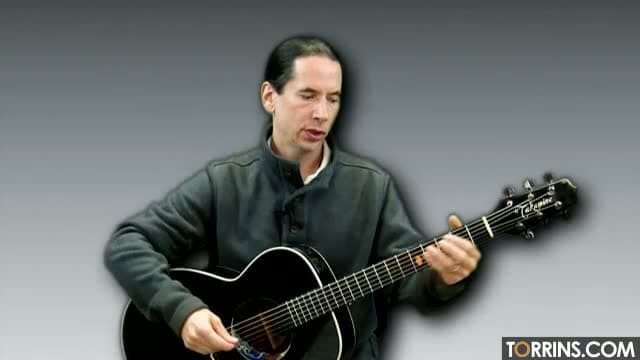
Tune in to the detailed guitar lesson for Good Riddance (Time of Your Life) on Torrins. This ballad, performed by the American rock band Green Day, is broken down step by step by our expert instructor, Steve Luciano. He explains the song’s various elements for better understanding, including chords, rhythm, and the backing track. The difficulty level of this tutorial ranges from beginner to intermediate.
Chords Used in Good Riddance (Time of Your Life) Guitar Lesson
Verse & Chorus Chords: The verse and chorus section uses open chords
Make use of the tabs provided with the lesson to follow along smoothly, understand finger placement, and improve your accuracy. The G chord in this song has a slightly more complex finger positioning than what beginners might be used to, but Steve breaks it down clearly to make it easier to play. He also offers alternative ways to approach the D/F# chord in case you find it challenging.
Strumming Pattern
Pattern: D-D-U-U-D
This pattern is played twice to complete one measure (four beats).
Steve shares great strumming tips to make the sound more defined.
Chord Transitions: Steve teaches smooth chord changes, such as G to Cadd9. Play along with Steve to get a good control over transitions.
Final Playthrough: Steve plays along with the song, showing how the full arrangement comes together.
Improvisation & Playing Techniques
- Learn how to make the full-sounding open-string G chord properly.
- Gain control over the Cadd9 chord, a popular chord in pop music.
- Tips for transitioning smoothly between chords.
Pro Tips from Steve
- Start slow – Play the melody in your head before playing along with the track, as the song has a fast strumming tempo.
- Focus on chord clarity and bass notes to make your playing sound cleaner.
FAQs – Good Riddance (Time of Your Life) Guitar Lesson
Q1. Is this song beginner-friendly?
A: Yes! While the song has a slightly complex G chord and a D/F# transition, it is still manageable for beginners with practice.
Q2. What strumming pattern is used in this song?
A: The strumming pattern is D-D-U-U-D, played twice per measure. Steve also shares tips on how to make the rhythm sound more natural and which strings to emphasize to achieve a sound closest to the original version.
Q3. Do I need a capo for this song?
A: No capo is required. The song is played in the key of G, using open chords.
Q4. Is this song played on an acoustic guitar?
A: Yes! The song is originally played on an acoustic guitar. However, you can use a clean electric guitar tone for a similar feel.
Fun Fact: The album version of this song begins with Billie Joe Armstrong messing up the opening chords twice before starting over and getting it right. These mistakes were deliberately kept to add a lighthearted introduction to the song.
The Good Riddance (Time of Your Life) song lesson is played in the key of G, and some of the chords used in this popular song include G, Cadd9, D, and D/F# (D with F# in the bass). Check out the complete lesson to learn the other chords that make up this song.