Song Demo
Introduction
Absinthe Party is the most well-known song from Minus the Bear. It involves intricate guitar play along with unique rhythm and tapping techniques. Minus the Bear is an Indie rock band from America; in their entire run, the band released a total of 6 studio albums.
Chords Used in Song Guitar Lesson
Arpeggios Verse & Chorus Chords: Instead of the traditional way, Minus the Bear uses the tapping technique to create arpeggios for this song, here’s an example of how you can also play arpeggios for this track:
e|------7h10p7-----7h10p7------|
B|-----------------------------|
G|----7---------7-------------|
D|--9---------9---------------|
A|-----------------------------|
E|-----------------------------|
Strumming Pattern
This song requires you to learn finger tapping, syncopated rhythms, along with layered guitar parts. The band was less resilient to the traditional strumming pattern; still if you are looking for a rhythm guitar approach you can follow this pattern: D D U U D U.
- D = Down strum
- U = Up strum
Song Structure
Introduction: The introduction of this guitar lesson starts with prepping your guitar with the necessary tuning.
Tapping Section: In this section, you will be learning about how to play the first part of the song using the two-handed tapping technique.
Distortion Section: For this section you have to turn on the distortion on your amplifier, you will be playing a repetitive riff which will be replayed 4 times in the song.
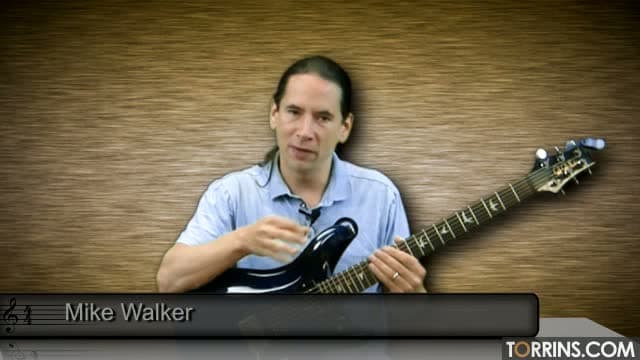
Song Demo: Here your music instructor Mike Walker is going to show you how to play the entire song with the backing track.
Overdubs: There are two overdub sections in this song and in this part of the guitar lesson Mike is going to teach you both of them.
Why Learn Absinthe Party By Minus The Bear?
For this song, you have to learn an intricate technique of two-hand tapping, which makes it both fun and challenging even for an expert guitarist. As you learn this song, you will be able to work on your dexterity, coordination and fluid playing.
FAQs – This Song Guitar Lesson
Q1. Did Minus the Bear stop performing?
Ans. In 2018, Minus the Bear came out with sad news of their retirement. They accompanied their retirement with a farewell tour as well. In 2025, the band reunited once again and announced an anniversary tour to commemorate their 20th anniversary of Menos el Oso.
Q2. Who is the lead singer of the Absinthe Party by Minus the Bear?
Ans. Jake Snider is the lead singer of the band, and he was the main vocalist of the song Absinthe Party.
Q3. What Type of music does Minus The Bear produce?
Ans. All the songs from Minus the Bear can be categorised as experimental rock, there had been a number of twists and turns in their music throughout their 17 year long run. The band was able to build a strong fan base after they were formed in 2001.
Fun Fact: A friend of the band went on a date and when Jake Snider who was singer and guitarist for the band asked him how his date was he said You know that TV show from the '70s, B. J. and the Bear? It was like that ... minus the Bear.' And from there all the members agreed on naming that reference as their official band name.
Introduction
Absinthe Party is the most well-known song from Minus the Bear. It involves intricate guitar play along with unique rhythm and tapping techniques. Minus the Bear is an Indie rock band from America; in their entire run, the band released a total of 6 studio albums.
Chords Used in Song Guitar Lesson
Arpeggios Verse & Chorus Chords: Instead of the traditional way, Minus the Bear uses the tapping technique to create arpeggios for this song, here’s an example of how you can also play arpeggios for this track:
e|------7h10p7-----7h10p7------|
B|-----------------------------|
G|----7---------7-------------|
D|--9---------9---------------|
A|-----------------------------|
E|-----------------------------|
Strumming Pattern
This song requires you to learn finger tapping, syncopated rhythms, along with layered guitar parts. The band was less resilient to the traditional strumming pattern; still if you are looking for a rhythm guitar approach you can follow this pattern: D D U U D U.
- D = Down strum
- U = Up strum
Song Structure
Introduction: The introduction of this guitar lesson starts with prepping your guitar with the necessary tuning.
Tapping Section: In this section, you will be learning about how to play the first part of the song using the two-handed tapping technique.
Distortion Section: For this section you have to turn on the distortion on your amplifier, you will be playing a repetitive riff which will be replayed 4 times in the song.
Song Demo: Here your music instructor Mike Walker is going to show you how to play the entire song with the backing track.
Overdubs: There are two overdub sections in this song and in this part of the guitar lesson Mike is going to teach you both of them.
Why Learn Absinthe Party By Minus The Bear?
For this song, you have to learn an intricate technique of two-hand tapping, which makes it both fun and challenging even for an expert guitarist. As you learn this song, you will be able to work on your dexterity, coordination and fluid playing.
FAQs – This Song Guitar Lesson
Q1. Did Minus the Bear stop performing?
Ans. In 2018, Minus the Bear came out with sad news of their retirement. They accompanied their retirement with a farewell tour as well. In 2025, the band reunited once again and announced an anniversary tour to commemorate their 20th anniversary of Menos el Oso.
Q2. Who is the lead singer of the Absinthe Party by Minus the Bear?
Ans. Jake Snider is the lead singer of the band, and he was the main vocalist of the song Absinthe Party.
Q3. What Type of music does Minus The Bear produce?
Ans. All the songs from Minus the Bear can be categorised as experimental rock, there had been a number of twists and turns in their music throughout their 17 year long run. The band was able to build a strong fan base after they were formed in 2001.
Fun Fact: A friend of the band went on a date and when Jake Snider who was singer and guitarist for the band asked him how his date was he said You know that TV show from the '70s, B. J. and the Bear? It was like that ... minus the Bear.' And from there all the members agreed on naming that reference as their official band name.
Explore More in English Songs



Introduction
Get ready to master another hit song on Torrins—If It's Love by Train. This moderate-level lesson is taught by Steve Luciano, who breaks down the song into easy-to-follow sections. You'll learn about the chords, strumming patterns, and intricate techniques that make this song so engaging. Steve also shares detailed tips on finger placements and rhythm to help you recreate the authentic feel of the original track.
Fun Fact: If It's Love was written on the same day as Train's hit Hey, Soul Sister in New York City. Pat Monahan wrote it as a love song for the band's long-time fans, thanking them for their unwavering support over the years.
Chords Used in If It's Love
The song is tuned half a step down and features a mix of standard and suspended chords. Some of the key chords used include:
- G triad
- G chord
- Gsus4
- Csus4
- D4
- Dsus/F#
- G/B
Tune in to the lesson to learn the other chords that make up this song. Steve carefully explains the finger placements for these chords, especially complex chords like Dsus/F#, to ensure you get the right tone.
Strumming Pattern
The song starts with a drum section, and Steve demonstrates how to simulate that drum feel using strumming techniques.
- In the beginning, the rhythm follows a 16th note pattern: DUDUDUD
- As the song progresses, the pattern shifts to: DDUUUD
Steve emphasises the importance of keeping your right hand moving to maintain a consistent rhythm. He also explains how to incorporate sliding and arpeggios into your strumming to enhance the song's texture.
Song Structure
If It's Love follows a clear and structured format. Tune in to the lesson to understand the arrangement of the song.
In the beginning, Steve uses just 3–4 chords, making it approachable for most players.
As the song progresses, he introduces more complex chords like Dsus/F#, adding depth to the arrangement
Steve concludes the lesson by playing along with the song, demonstrating smooth transitions between sections.
Improvisation Techniques
For more advanced players, Steve teaches how to improvise over the progression using slides and arpeggios. He also explains how to replicate the original feel of the song by experimenting with the rhythm and strumming intensity.
Why Learn If It's Love?
This song is an excellent way to improve your chord transitions and rhythm skills. It also introduces suspended chords and alternate fingerings, helping you build greater versatility in your playing.
Tips to Control Strumming Intensity:
- Keep the beginning section light with gentle strumming.
- Add more intensity in the chorus by strumming harder and using accents.
- Maintain a steady rhythm throughout the song to keep the groove intact.
FAQs – If It's Love Guitar Lesson
Q1. How can I improve my rhythm and timing?
Practice with the backing track and focus on Steve’s tips for simulating the drum section with your strumming.
Q2. Do I need to tune down my guitar?
Yes, the song is tuned half a step down for an authentic sound.
Q3. How can I handle the suspended chords more smoothly?
Steve suggests specific finger placements and transitions to make switching between suspended chords easier.